Bodyguard – a Netflix thriller

Ed note: This six episode of this mini-series nearly brought England to a standstill as 17 million persons there tuned in to find out what happened.

David Budd (Richard Madden), a military veteran who fought in the Middle East, prevents a suicide bomber from blowing up a train, allowing the arrest of the terrorists who planned the attack: due to his heoric act, he’s promoted to the role of bodyguard for Julia Montague (Keeley Hawes), a conservative and controversial politician. In Season 1, the relationship between the two starts out as very tense because of their differing views, but they learn to trust each other. Meanwhile, Budd also has to deal with personal demons: his PTSD and the strained relationship with his wife.

Posted in Entertainment, Media, Movies, Politics, Uncategorized | Comments Off on Bodyguard – a Netflix thriller

The modern shoot out

9 to 5 Comic Strip for January 07, 2019
Posted in Humor, Politics | Comments Off on The modern shoot out

Nature vs Nurture – our beliefs may be more important than our genes in this study

Ed note: The age old argument about nature vs. nurture will likely continue on for ages. In the field of epigenetics it’s been discovered that we can actually turn our genes off/on with some life experiences. At times our beliefs may have more effect than our genes – as is shown in this fascinating study. So little is known about what makes us tick!

If you tell people they have a genetic predisposition to a low capacity for exercise or a tendency to overeat, their bodies start to respond accordingly.

From the NYT: “Just in time to befuddle people who received genetic testing kits for the holidays, a new study finds that if you tell people that they have a genetic predisposition to certain health characteristics, such as a low capacity for exercise or a tendency to overeat, their bodies start to respond accordingly. Even if their DNA does not actually contain the gene variants in question.

The study raises provocative questions about the extent to which our genes affect our physical well-being and whether, in some instances, our beliefs about our bodies, capabilities and limits might be even more influential.

DNA testing is trendy at the moment. Over-the-counter and prescription testing services promise to tell us about our health inheritance, including whether we are prone to weight gain, will respond well to exercise, can metabolize various foods efficiently, and face heightened — or reduced — risks for a broad range of medical conditions.

The accuracy of many of these claims, however, remains in doubt. Most scientists who study genetics consider the effects of many particular gene variants on health to be generally slight and still poorly understood.

But even less is known about the psychological impacts of learning that you might have a high or low genetic risk for health and fitness problems and how our subsequent attitudes might play out in our physiology.

So, for the new study, which was published in December in Nature Human Behavior, researchers at Stanford University set out to fool a large group of men and women about their genetics, at least temporarily.

Posted in Education, Essays, Fitness, Health, Science and Technology | Comments Off on Nature vs Nurture – our beliefs may be more important than our genes in this study

My kind of cat

Image result for new yorker cartoon
Posted in Humor | Comments Off on My kind of cat

For Seattle, Viadoom gridlock is history repeated

From Crosscut: On Jan. 11, Seattle enters a period the city has dubbed the “Period of Maximum Constraint.” It sounds a bit like bondage, but without the fun bits. It kicks off with the closure of the Alaskan Way Viaduct, resulting in three weeks of maximal transportation disruption.

This will be the longest planned highway shutdown in Seattle history and will tie up commuters by displacing approximately 90,000 viaduct trips per day. The new Bertha-bored tunnel will not yet be open.

Laura Newborn, project spokesperson with the Washington State Department of Transportation, reminds us that the viaduct replacement is about safety. The structure suffered earthquake damage in 2001 and has been slowly sinking. “It’s not about making traffic better,” Newborn says. Now they tell us.

In the short term, it will make traffic much worse. The crunch should be alleviated when the Highway 99 tunnel opens after the predicted three-week interregnum following the viaduct’s closing. They won’t be charging tolls at first, so the new tunnel should absorb many of those 90,000 vehicle trips, and perhaps more, until tolling is instituted. And when tolling does go into effect — not before summer, Newborn says — no one really knows what the effect will be. Certainly better than a closed tunnel, but not everyone will want to pay. So the surface streets might be clogged with more drivers on an ongoing basis.

Posted in environment, Essays, History, In the Neighborhood, Transportation | Comments Off on For Seattle, Viadoom gridlock is history repeated

Now I will do nothing but listen’ – Walt Whitman on how sound shapes the self

I hear the chorus, it is a grand opera,
Ah this indeed is music – this suits me.

From Aeon

‘Song of Myself’ was first published as an untitled selection in Walt Whitman’s landmark poetry collection Leaves of Grass (1855), and was revised by Whitman until his death in 1892. The 52-section free-verse work is a vivid and sprawling exploration of selfhood narrated by an observer, who at times seems to transcend the constraints of the human mind. Part of a poetry series created for a Harvard University online neuroscience course, this video features words from the 26th section of ‘Song of Myself’ – a meditation on the ceaseless stream of sounds, mundane and sublime, that the narrator experiences. The video skilfully conjures Whitman’s prose, with a fluid, dreamlike animation style that captures the vivid sensuousness of his words, combined with Civil War imagery that alludes to the context in which they were written.

Posted in Poetry | Comments Off on Now I will do nothing but listen’ – Walt Whitman on how sound shapes the self

The reason why Canada made marijuana legal

Posted in Humor | Comments Off on The reason why Canada made marijuana legal

Bill Gates: 5 books I loved in 2018

Ed Note: Gates’ first selection. Educated, is the February book at Skyline for 2019. Hope you all get a chance to read this fascinating memoir.

Bill Gates: “My list is pretty eclectic this year. From a how-to guide about meditation to a deep dive on autonomous weapons to a thriller about the fall of a once-promising company, there’s something for everyone. If you’re looking for a fool-proof gift for your friends and family, you can’t go wrong with one of these.

Educated, by Tara Westover. Tara never went to school or visited a doctor until she left home at 17. I never thought I’d relate to a story about growing up in a Mormon survivalist household, but she’s such a good writer that she got me to reflect on my own life while reading about her extreme childhood. Melinda and I loved this memoir of a young woman whose thirst for learning was so strong that she ended up getting a Ph.D. from Cambridge University.

Army of None, by Paul Scharre. Autonomous weapons aren’t exactly top of mind for most around the holidays, but this thought-provoking look at A.I. in warfare is hard to put down. It’s an immensely complicated topic, but Scharre offers clear explanations and presents both the pros and cons of machine-driven warfare. His fluency with the subject should come as no surprise: he’s a veteran who helped draft the U.S. government’s policy on autonomous weapons.

Bad Blood, by John Carreyrou. A bunch of my friends recommended this one to me. Carreyrou gives you the definitive insider’s look at the rise and fall of Theranos. The story is even crazier than I expected, and I found myself unable to put it down once I started. This book has everything: elaborate scams, corporate intrigue, magazine cover stories, ruined family relationships, and the demise of a company once valued at nearly $10 billion.

21 Lessons for the 21st Century, by Yuval Noah Harari. I’m a big fan of everything Harari has written, and his latest is no exception. While Sapiens and Homo Deus covered the past and future respectively, this one is all about the present. If 2018 has left you overwhelmed by the state of the world, 21 Lessonsoffers a helpful framework for processing the news and thinking about the challenges we face.

The Headspace Guide to Meditation and Mindfulness, by Andy Puddicombe. I’m sure 25-year-old me would scoff at this one, but Melinda and I have gotten really into meditation lately. The book starts with Puddicombe’s personal journey from a university student to a Buddhist monk and then becomes an entertaining explainer on how to meditate. If you’re thinking about trying mindfulness, this is the perfect introduction.”

Posted in Books, Uncategorized | Comments Off on Bill Gates: 5 books I loved in 2018

Irene Peden’s talk at Skyline

Posted in History, Science and Technology | Comments Off on Irene Peden’s talk at Skyline

Treating Alzheimer’s by treating aging

Ed note: The Alzheimer’s drugs have been very disappointing. So are strawberries and curry part of the solution? Creative scientists at the Salk Institute are looking at the possibility that “anti-aging” treatments may be part of the answer. The article below from the San Diego Tribune is worth reading.

Aging has been traditionally considered an inevitable part of life, not a disease. But modern molecular biology is uncovering how aging affects the body beyond the wrinkles, gray hair and aching joints.

Scientists have made great progress in fighting many of the illnesses more likely to afflict the elderly, including cancer and heart disease. But researchers have made very little progress against one of the most devastating age-related diseases: Alzheimer’s, which slowly robs patients of cognition and memory until they die.ADVERTISING

About 5 million Americans are estimated to have Alzheimer’s, according to the National Institutes of Health. Another 1 million have mild cognitive impairment, which puts people at elevated risk for developing full-blown Alzheimer’s.

Researchers know a great deal about Alzheimer’s. They know how certain toxic proteins slowly destroy neurons and the brain. They can even see the telltale signs of Alzheimer’s in brain images that reveal these toxic proteins accumulating in the living brain.

But the drugs they have developed with this knowledge have failed to stop or even slow down the disease. At best, they can temporarily relieve symptoms.

Faced with this lack of progress and great need, some scientists say we need to think entirely differently about Alzheimer’s. Instead of developing drugs to treat the disease itself, they advocate developing drugs that generally promote brain health. Specifically, they want to slow down the harmful changes in the brain that accumulate with age.

Early this year, this idea will literally be put to the test. For the first time, humans will be given an Alzheimer’s drug developed to slow down harmful age-related changes in the brain. When given the drug, strains of mice that age rapidly preserved a youthful appearance longer, and performed better on cognitive tests such as running mazes.

Abrexa Pharmaceuticals of San Diego has licensed the drug, developed by scientists at the Salk Institute. Privately held Abrexa recently received U.S. regulatory permission to begin human testing.
Posted in Health | Comments Off on Treating Alzheimer’s by treating aging

It must be in their DNA

Image result for peanuts cartoon
Posted in Humor | Comments Off on It must be in their DNA

January 15th – 7:30 Parallels in Autocratic Leadership by Wolfgang Mack

Ed Note: Living in a totalitarian state was a transformative experience for the author. He will tell of his concerns about the rise of fascism in a number of countries and the dangers of nationalistic movements in our current politicalarena. Can we learn from the past?

From Marilyn Di B:

Dear Friends and Neighbors,

This is a reminder to mark your calendars to attend
Wolfgang Mack’s presentation of his book.
Tuesday, January 15th at 7:30 in Mt Baker room.

Many of you were given a copy in the hopes we’d have an active exchange at this event. If you haven’t read the book yet, you have 10 days before his appearance. If you have read it, I’d encourage you to pass it on to a neighbor who might be interested ….. or an adult child. There are more copies with Jensen Ng in Lifestyle.
It’s also available on Amazon if you care to recommend.

If you’ve ,,, never received a book, please reach out and obtain one. We hope to have a full house attendance, and that each of you will be there!

Posted in History, Politics, Social justice, Uncategorized | Comments Off on January 15th – 7:30 Parallels in Autocratic Leadership by Wolfgang Mack

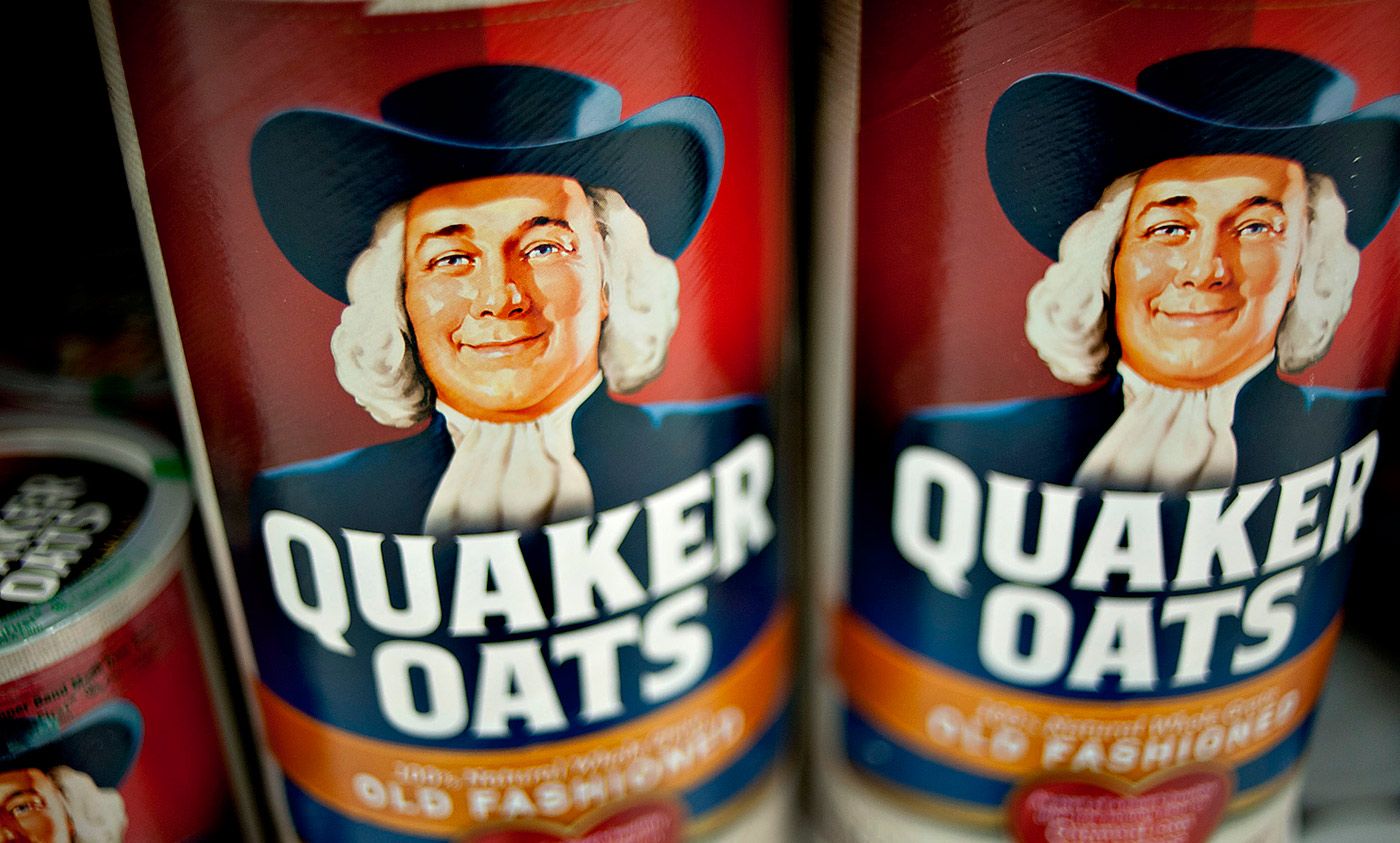
He’s not the guy on Quaker Oats: he’s much more interesting

<p/>Not William Penn. <em>Photo by Daniel Acker/Bloomberg via Getty Images</em>“/></figure>


<p><em>Ed note: The statue of William Penn is a Philadelphia landmark. Sitting on top of City Hall, it maintained the highest perch in the center of the city for many years until the building codes changed. The history below gives a fascinating glimpse of this complicated man.</em></p>


<p><em>From Aeon by Andrew Murphy:</em> “This year marks the 300th anniversary of the death of William Penn. For someone with such a prominent name, he remains a little-known and much-misunderstood figure. Iconic representations abound, of course, none more prominent than the 37-foot bronze statue atop Philadelphia City Hall. In that rendering, decked out in lace cuffs and holding his colonial charter, Penn looks every bit the far-seeing, visionary founder. Many assume that the familiar face on the Quaker Oats box, with its peaceful mien and slightly bemused smile beckoning the viewer to a healthy breakfast, is Penn. And then there is the portly older Penn, wearing a serious expression – a scowl, almost – and a vest that seems barely to button around his midsection.</p>


<p>There are others, of course, including the images of Penn meeting with the Lenni Lenape under the Treaty Elm at Shackamaxon, which both reflected and reinforced Pennsylvania’s powerful founding mythos differentiating Penn’s just treatment of natives from the violence countenanced by other colonial founders.</p>


				<div class=Pages: 1 2
Posted in History | Comments Off on He’s not the guy on Quaker Oats: he’s much more interesting