
Where was I looking up?
HINT: If you pay for good seats, you miss seeing this.
Where was I looking up?
HINT: If you pay for good seats, you miss seeing this.
Huge sums of money are being spent on developing drugs to prevent, delay or treat Alzheimer’s. The ones so far have very little if any benefit. So could this disease be linked to an infectious source? It took a long time for the scientific community to accept that gastric and duodenal ulcers were caused by H Pylori and can be cured with antibiotics. Likewise, it took quite a while to accept that rheumatic fever was caused by the streptococcus. The infectious theories for Alzheimer’s are nicely reviewed in the following article written by Melinda Wenner Moyer, a science and health journalist.
From Aeon: “On Friday afternoons, Robert Moir, a neurologist at Massachusetts General Hospital in Boston, indulges in what he calls his ‘play hour’. He doesn’t go to the gym or head to the bar; he plops down in front of his computer – OK, yes, usually with a beer in hand – and directs his browser to PubMed, the US National Library of Medicine’s database of study abstracts from life-science journals. Then he hunts around for hidden gems: studies that might provide a fresh perspective or lead him down a new research path. On 11 May 2007, Moir stumbled across a set of studies while sipping a Sam Adams that would change the course of his career.
Moir studies Alzheimer’s disease; more specifically, he investigates beta-amyloid, the protein that clumps into big, gnarly plaques in the brains of Alzheimer’s patients. According to the prevailing dogma known as the amyloid cascade hypothesis, the build-up of beta-amyloid in the brain directly causes Alzheimer’s – it sparks the accumulation of tau tangles (a primary marker for the disease) inside neurons, leading to cell death and, eventually, dementia. Nothing good comes from amyloid plaques, most scientists contend. They are nothing but devastating biological accidents.
Summary from AgingKingCounty: “The American Society on Aging (ASA) leadership firmly rejected President Trump’s 2019 budget proposal today, denouncing the bleak vision of the future envisioned by a budget that would mean even further erosion in standards of living for tens of millions of vulnerable and low-income Americans. Over the next ten years, the Administration proposes to reduce non-defense discretionary spending by a staggering 42.3 percent—which would reduce federal spending as a share of GDP to levels not seen since the Hoover era.
Having just passed a so-called “tax reform” measure that will improve the incomes of the richest Americans, the 2019 Trump budget proposal provides a further slap in the face to older people on fixed incomes, people with disabilities, and just about anyone else who might need a safety-net support.
Gordon Gray sends along this fascinating video showing the production of a Mercedes car with minimal use of human hands until the finishing touches. We visited one of the factories near Stuttgart in 1982 and were impressed by the use of robots then – but what a difference now!
We loved it when the ladybugs arrived in the spring, feasting on aphids and helping our rose garden thrive. But where do they go in the winter? See the video below.
From National Geographic: “There are about 5,000 different species of ladybugs in the world. These much loved critters are also known as lady beetles or ladybird beetles. They come in many different colors and patterns, but the most familiar in North America is the seven-spotted ladybug, with its shiny, red-and-black body. In many cultures, ladybugs are considered good luck.
“Most people like them because they are pretty, graceful, and harmless to humans. But farmers love them because they eat aphids and other plant-eating pests. One ladybug can eat up to 5,000 insects in its lifetime!”

This project was highlighted by King 5 – thanks Tom! “A group in Seattle is working to bring back the historic streetcars to the city.
‘Friends of the Benson Trolleys’ is a new non-profit trying to raise funds so !they can restore and re-start the historic streetcar network.
A few years back three of the streetcars were sold to St. Louis, but two are currently housed in a storage facility in Anacortes.
Leaders of the push say SDOT and Metro Transit are supportive, but they still need to raise funds.
Right now, they started an online fundraiser to raise nearly $30,000 for an engineering study to determine what they need to do to reduce the voltage that the current overhead trolley wires carry. If they can raise that money they need, an estimated additional $1 million to get each car up and running.
“Now we can’t put them back on the waterfront because the park plan doesn’t provide for it, but putting them on 1st Avenue is a close second,” Charles Gibbs said. “Being able to run them from, as I said, from the International District through Pioneer Square here, past the market and down to Mohai, with a vintage car is an opportunity to connect the four most significant historic sites in the city with a vintage car would be a wonderful ride not only for residents, but certainly for tourists.”
In a booming city, Gibbs knows this would be a great opportunity to re-connect with Seattle’s history.
“We’re looking for an opportunity to restore and preserve the legacy that George Benson created with the Waterfront Streetcar line,” Gibbs said. “We’re losing contact with our history. As we build more and more buildings, glass buildings, attractive in many respects, but we are losing contact with an important part of our history which is the streetcar network.”
If you are interested in helping with this effort, visit friendsofthebensontrolleys.org.”
Recently, you may have received an important message about the risk of falls and fractures when adding new anti-hypertension medications. It importantly stresses the risk of falls and fractures in the first two weeks after adding additional anti-hypertensive therapy: see Antihypertension BP fall prevention. Here are a few additional preventative steps to consider.
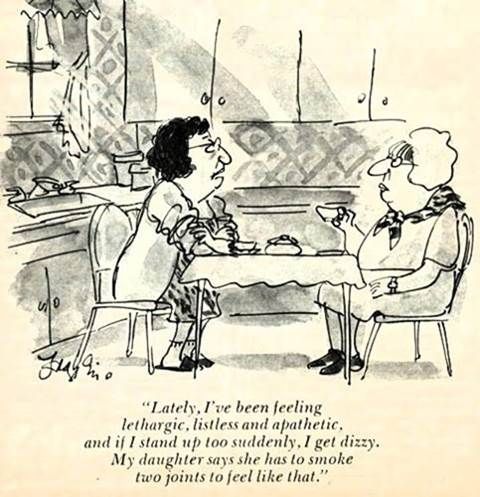
When discussing the risks with your doctor, you will want to be thinking about how to prevent falls related to BP medications. Because BP meds can produce postural hypotension, it’s reasonable for patients to check their BP both sitting and standing (the BP often significantly falls with standing). If your systolic drops below 100 mmHg you are certainly at risk for falls. Also, electrolyte imbalance can at times play a role. Low sodium can cause weakness and low potassium as well. So as an advocate, I’d suggest you ask your doc to check your electrolytes; and also home monitor your BP twice daily sitting and standing at least for the first few weeks after BP medication changes. Additionally, after sitting or lying down – hang onto something and gain equilibrium before walking, especially when getting up at night.
If we live to be 90, we may well have slept for 30 years. We really don’t know why we have to sleep, but we do know that sleep deprivation can cause all kinds of problems. Coffee and amphetamines can help those doing all-nighters in college, but what about soldiers who have to be alert and problem solving for extended hours. And could we, in a sense, extend our cognitive lives by sleeping 4 hours instead of 8? Read below to learn about research using the Somno mask and Transcranial direct-current stimulation (tDCS). Truly fascinating.
Here’s an interesting update from Aeon: “Work, friendships, exercise, parenting, eating, reading — there just aren’t enough hours in the day. To live fully, many of us carve those extra hours out of our sleep time. Then we pay for it the next day. A thirst for life leads many to pine for a drastic reduction, if not elimination, of the human need for sleep. Little wonder: if there were a widespread disease that similarly deprived people of a third of their conscious lives, the search for a cure would be lavishly funded. It’s the Holy Grail of sleep researchers, and they might be closing in.
As with most human behaviours, it’s hard to tease out our biological need for sleep from the cultural practices that interpret it. The practice of sleeping for eight hours on a soft, raised platform, alone or in pairs, is actually atypical for humans. Many traditional societies sleep more sporadically, and social activity carries on throughout the night. Group members get up when something interesting is going on, and sometimes they fall asleep in the middle of a conversation as a polite way of exiting an argument. Sleeping is universal, but there is glorious diversity in the ways we accomplish it.
From Alice and Joe Wesley: Here it is mid-February and here is our little scarlet oak in all its leafy glory.

One of our goals in the CEG is to share our views with one another with suggestions to contact our elected officials and to forward the suggestion to our friends and family who may share those views.
Our first suggestion of the year comes from Diana Caplow, (with some additional information from others) regarding President Trump’s desire for a parade, possibly on Veterans day with a huge show of military might.
It seems appropriate to express your feelings about the President’s proposed “grand” military march, to your representatives, and to the White House.
With 10,000 homeless in Seattle, people hungry in Puerto Rico, the New York subway falling apart, Amtrak needing some assistance, a short list; is a military parade a proper use of millions of dollars?
“Dear Diary:
My wife and I felt so lucky to find a parking spot on the street two blocks from Lincoln Center when we attended a production of “Turandot” at the Metropolitan Opera. All we had to do was stay in the car until 6 o’clock when the spot would become legal.
As we chatted about our good fortune in not having to pay for a parking garage, out of the corner of my eye I saw a car coming down the street that seemed to be way too close to ours as it tried to squeeze past the backed-up traffic.
And then, boom: Our driver’s side rearview mirror was gone.
I ran after the car, which stopped a few car lengths ahead of ours. The driver, a woman who appeared perplexed, listened as I told her she needed to give us her information.
She backed up into a driveway behind us to get out of traffic. We all calmed down, the matter was resolved and the woman promised to compensate us for the damage.
We had gotten back into our car to continue waiting for 6 o’clock to arrive when the woman who had knocked off our mirror pulled up next to us and rolled down her window.
Thinking she had forgotten something, I rolled mine down as well.
“Are you staying in that space?” she asked.”
Mount Baker Room — 4:00 p.m. to 5:00 p.m.
If you have other items you would like included on the agenda please notify Jim Sanders at jimsanders1947@gmail.com.

Ed Note: If you are interested in volunteering at Skyline, talk to anyone on the Community Caring Committee or just join a committee of interest. Life at Skyline is vibrant because of the volunteering spirit.
“With the holidays and Martin Luther King Jr. Day of Service in the rearview mirror, you may be thinking about how to give back.
“Research shows that volunteering is good for your health and mental well-being, especially for older adults. Volunteers may make better healthcare decisions and use preventative care services more often. Some experts even believe volunteering could prove to be an important public health intervention.
“How, exactly, does helping others benefit our own health? One key factor is the effect it can have on your social life.
“Positive social relationships where people are working toward the same goal are beneficial,” says Noah Snyder-Mackler, Ph.D., a psychologist at the University of Washington who studies how relationships affect gene regulation.
“Social interaction is so important that it can literally mean life or death. Studies have shown that people who are more socially connected are less likely to die prematurely. In fact, social isolation is just as detrimental to health as excessive drinking, Snyder-Mackler says.
“Having strong connections with others is on par with the way quitting smoking or drinking affects your health and mortality,” he says.
“In this sense, having strong social connections doesn’t mean you have to have dozens of friends or try to turn yourself into an extrovert if you’re naturally more introverted. Longer-term relationships and those that center on giving and receiving support are most beneficial, says Snyder-Mackler. Quality matters more than quantity.
“His research has shown that relationships also have a preventative effect on health by countering how your body responds to stress. If you have many or frequent small sources of stress in your life, those stressors can accumulate over time and lead to chronic stress.
“Too much stress has been shown to trigger the immune system and create an inflammatory response in the body, Snyder-Mackler says. Low-grade inflammation contributes to a plethora of conditions, from diabetes to heart disease.
“Having strong social relationships actually protects you from the negative impacts of stress and makes you more resilient,” Snyder-Mackler says.
“He’s currently researching how social relationships regulate genes involved in inflammatory responses, in the hopes that this effect could be better understood and adapted to help protect people from developing chronic diseases.
The following link is to a PDF of the CEG meeting notes for January 26th.
If you google cell phone addiction, you’ll find plenty of discussion – some quite serious about what the constant use may be doing to our brains and social interactions. My dentist told me some children must have their smartphone with them in the chair and often will text during a break. We’ve all seen mothers on their phones at the bus stop not interacting with their children. A cell phone addicted pedestrian and driver are a lethal combination. So where is this going? Is reality always elsewhere? There are many suggested “cures” akin to 12 step programs, but where is it all going?


The Super Bowl today was a great game, no doubt about it. But 25 years from now, we might see this violent sport remembered as interesting but sad – an historical cultural oddity.
“Mike Ditka, the head coach of the Super Bowl–winning 1985 Chicago Bears team, says that if he had a young son today he would not let him play football.
“That’s sad. I wouldn’t. And my whole life was football. I think the risk is worse than the reward. I really do,” Ditka told HBO’s Real Sports with Bryant Gumbel, according to the Chicago Tribune.
The episode, set to air Tuesday, features a report about the excessive use of painkillers and narcotics by players to overcome injuries and get back on the field.
The report says that 30 years after Ditka’s “greatest NFL team of all-time,” many of his legendary players are dealing with serious debilitation as a consequence.”
In thinking about a legacy, many notable people left interesting epitaphs. The tone varies widely with strains of lament, humor, religiosity, hope and peace. Do you have a favorite? What would you write for yourself or a loved one? Here are a couple of examples:
|
|
Feb Phenom – sent along by a friend’s mother!
The groundhog is a bucktoothed little rodent
Who sleeps away the winter in the ground.
But once a year there comes his special moment,
When February second comes around.
It’s then that he’s awakened from his slumbers,
And finds that he’s been put upon display
To TV lights and crews in countless numbers,
And all because, they say, it’s “Groundhog Day!”
When he, obliging, lets them take their pictures,
Obliging, casts his shadow in the sun,
And when at last they’ve carted off their fixtures,
The annual tomfoolery is done.
Then, weary of the lights and noise and action,
He sleepily retires to his den,
And, smugly, takes his quiet satisfaction
In knowing that he’s conned them, once again!
******************************************************************
“(CNN)The groundhog hath spoken! Welcome to six more weeks of winter. On Friday morning, Punxsutawney Phil scurried out of his little marmot hole and saw his shadow. This omen indicates a long winter. Great. Why do we do this?