
Thanks to Bob Peterson

Thanks to Pearl McElheran
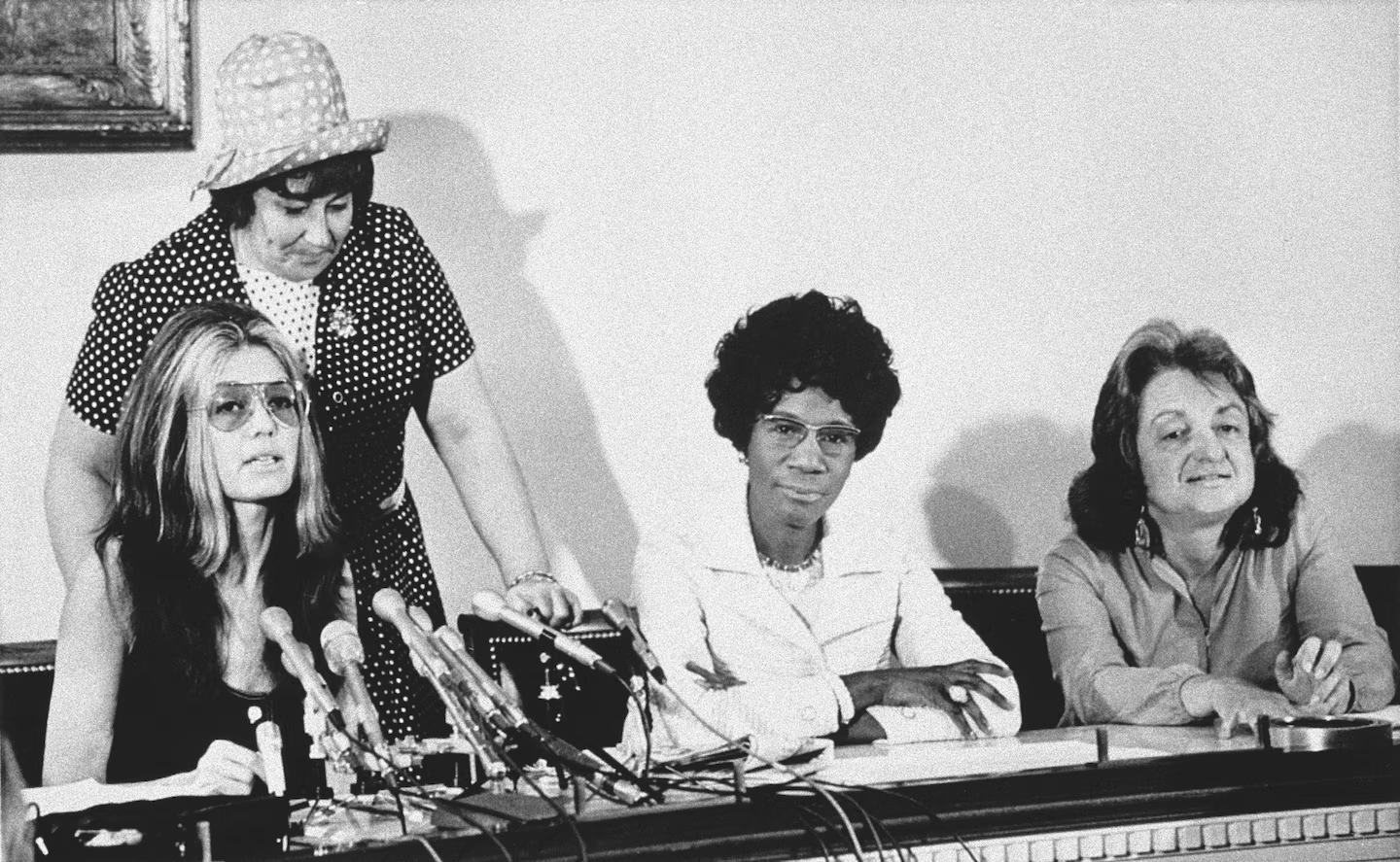
We’re all old enough to remember these women, aren’t we?
Gloria Steinem (1934 – 2026) Just a few years ago she said, “I hope I live to be 100. There’s so much work to be done.” She almost made it.
Ed: Go to Page 2 if you don’t remember all the names of these famous women!
Thanks to Pam Peterson

Set to open on June 4, 2027, The Whale is a new museum in Norway dedicated to exploring the “science, behavior, evolution, and cultural history of whales.”
Using immersive art, storytelling, sound, and architectural features, The Whale will be unlike any other museum experience before — mostly because it will feel like guests are visiting the actual interior of a massive whale.

The building is still under construction in Andenes, a village on the northern tip of the Norwegian island of Andoya, but Copenhagen-based architecture firm Dorte Mandrup has big plans.
The spot is located roughly 190 miles from the Arctic Circle, which Dorte Mandrup says makes the location a “small town located amid dramatic landscapes.”
“It is frequently visited by migrating whales, making Andenes one of the best places in the world to see this fabled animal up close,” the firm shares on its website. (continued on Page 2)
The family at the center of Pennsylvania’s measles controversy tells their story. By Tom Bartlett in The Atlantic (thanks to Ed Marcuse)

When the Amish man emerged from his barn to greet me, he had no idea that his newborn son’s death had become national news. The man wore a straw hat, black trousers, and suspenders over a long-sleeved blue shirt; one of his similarly dressed sons was guiding a horse-drawn plow in a nearby field.
The man told me that, like most Amish people, he and his family don’t watch TV or use the internet. They don’t read the newspaper either. So they didn’t know until I told them that last Tuesday, Pennsylvania’s governor, Josh Shapiro, held a press conference to announce the first two “measles-associated” deaths in the state in 35 years. Both of the people who died were from Lancaster County, which is home to the largest Amish community in the country and has been hardest hit by the state’s months-long measles outbreak.
They also didn’t know that Shapiro’s political opponents are accusing him of using the deaths to score political points, or that the county’s coroner later told reporters that his office had performed an autopsy on an infant who tested positive for measles but that the cause of death had been a ruptured spleen. The confusion led Robert F. Kennedy Jr., the secretary of health and human services, to mock Shapiro on X, calling his press conference “unseemly” and an example of “the weaponization of infectious disease fears for political gain.” Without evidence, Kennedy wrote that “the deaths may even have been altogether fabricated by one of the Governor’s hopeful staffers.” (continued on Page 2)
Thanks to Pam Peterson (source from Techcrunch.com)
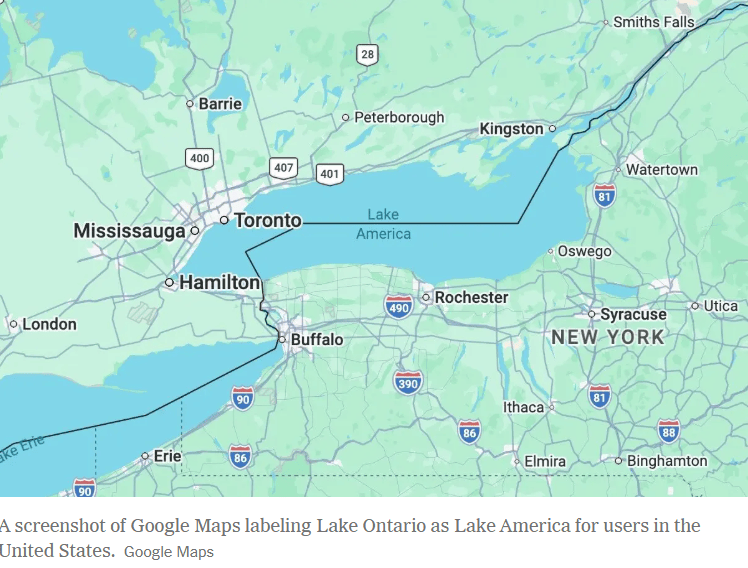
MapQuest stood up to President Donald Trump, and now its app is reaping the rewards.
The “OG of online mapping,” as the company calls itself, announced on Thursday that it would not change the name of Lake Ontario on its maps to Lake America, despite Trump’s executive order directing the U.S. Department of the Interior to update the lake’s name in the U.S. geographic naming service. As a result, MapQuest’s mobile app downloads soared, sending the iOS app to the No. 4 position on the U.S. App Store’s Top Charts for apps (not including games) as of Monday morning on the U.S. east coast.
MapQuest also reached the No. 8 position overall in the U.S. App Store across both apps and games, and it became the No. 1 Navigation app in the United States.
In Canada’s App Store, the app reached No. 2 overall as of Sunday evening.
Thanks to Mary Montgomery
 Loading…
Submitted by Pam Peterson – from Goodgoodgood

NASA astronaut and Artemis II Mission Specialist Christina Koch was honored Wednesday with the Order of the Tar Heel, the highest award bestowed by the North Carolina Commissioner of Labor. Koch, a Jacksonville native and N.C. State University graduate, became the first woman to travel beyond low Earth orbit, and with her crew broke the record for the farthest distance humans have ever traveled in space.
“Her accomplishments with NASA have made history, but her commitment to encouraging students to pursue STEM education may be among her most important contributions,” said Labor Commissioner Luke Farley, at the award ceremony at the historic Labor Building in downtown Raleigh.
The award recognizes Koch’s work with NASA as well as her ongoing advocacy for science, technology, engineering, and mathematics education.

Koch said her mission would not have been possible without countless workers, all willing to contribute their unique talents to make the mission a success. A-B Emblem of Weaverville, North Carolina, was among the businesses recognized for producing the Artemis II patch, which was designed by the astronauts. (continue on Page 2)
Thanks to Pearl McElheran

In 2012, during Bashar al- Assad’s ruthlessly bombing of both the successful and the unsuccessful, the Hassad family was forced to flee Syria. Their successful chocolate business was totally destroyed. After a few years stay in Lebanon as refugees, they were invited to come to Canada. In 2016 they opened their first chocolate shop in the small town of Antigonish in Nova Scotia. I visited the shop not long after it opened because I just happened to be on a tour of the Maritime provinces. Their shop where they made their chocolates was a square room, probably smaller than my main room here at Skyline.
Their business flourished and they now have stores from east to west in Canada. They’ve just created a new chocolate bar to show their loyalty to the country that took them in.
When I was in grade school in Ohio, I learned this pneumonic, HOMES, in order to remember the Great Lakes: Huron, Ontario, Michigan, Erie and Superior. Now kids will have to try something new. So SHAME (Superior, Huron, America, Michigan and Erie) came to mind, yes shame on the pettiness of our President.
Manya Drobnack forwarded this post which may help “simplify North American geography.”
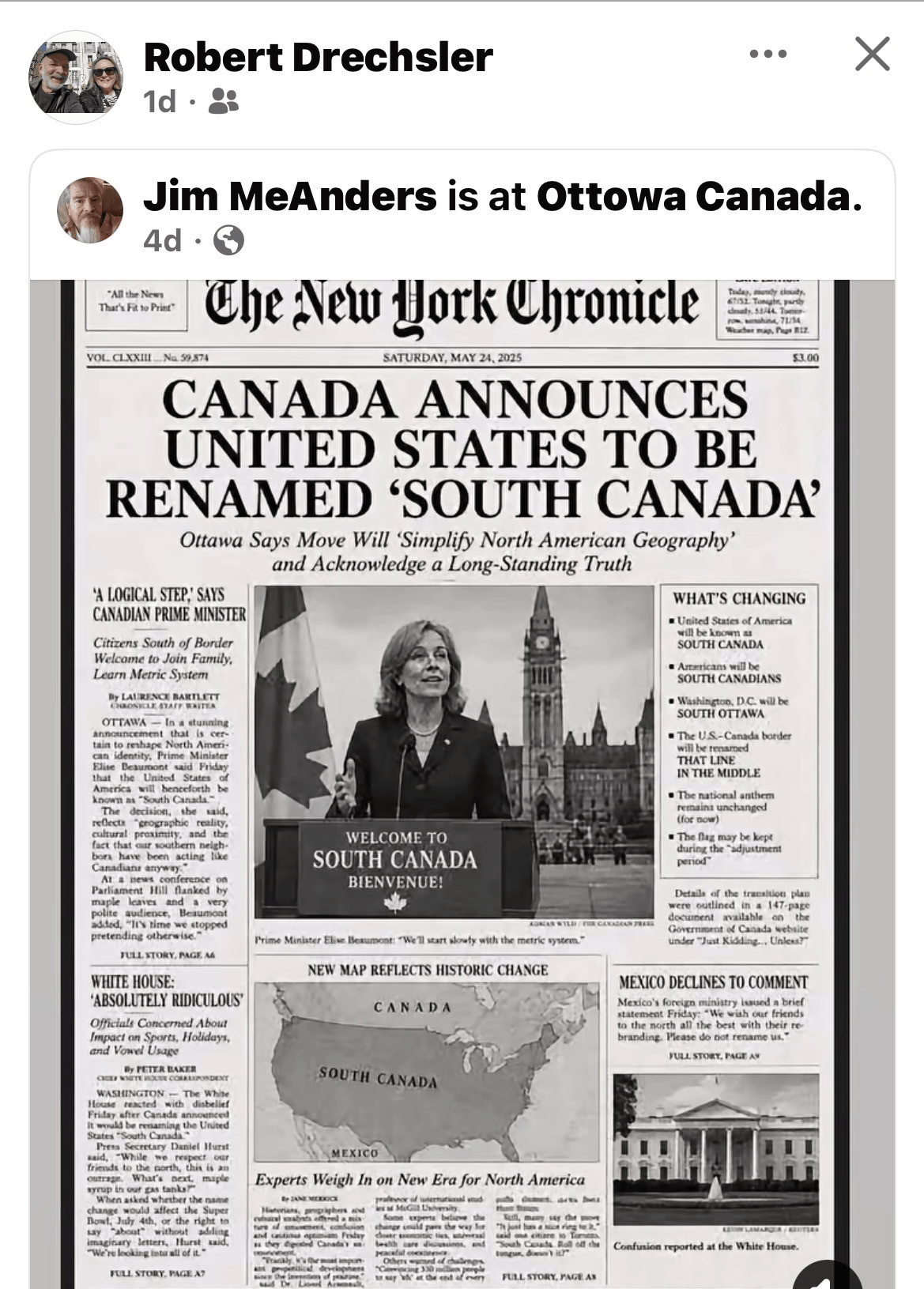
Submitted by friend John Roper
By Katherine Long Special to The Seattle Times
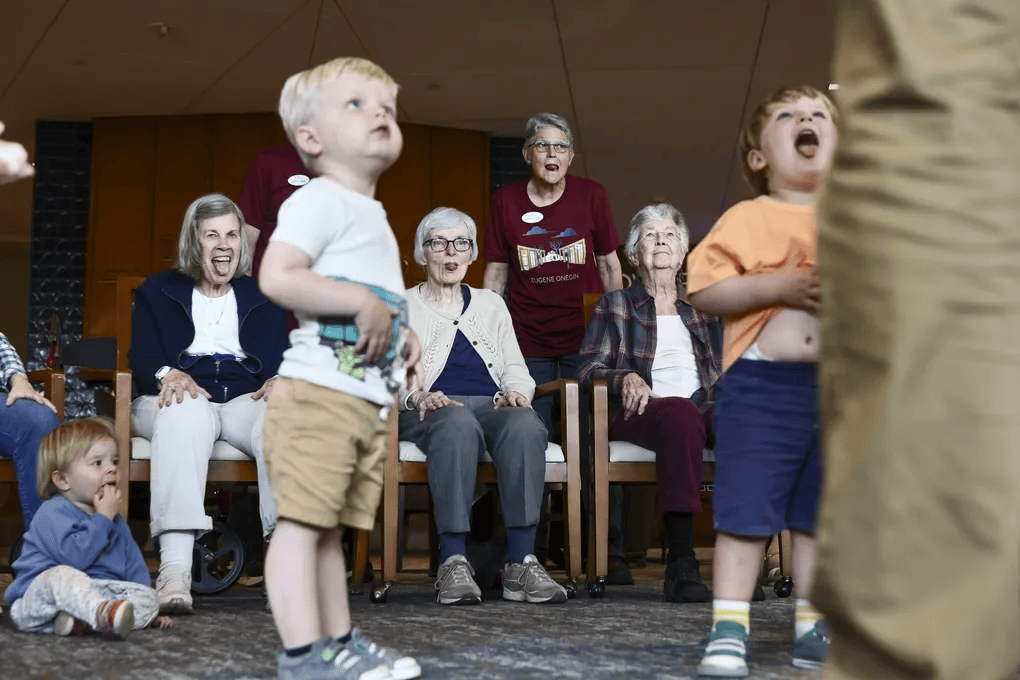
Retired teacher and school librarian Marlene Peters settled into a familiar place in the lobby of Bayview this month and opened a favorite book to read to a dozen squirmy toddlers at her feet.
Although her delivery and cadence were calibrated to hold the attention of 4-year-olds, another audience was also listening closely: about a dozen of her fellow residents at Bayview, a retirement community at the base of Queen Anne Hill.
Peters, 85, has been reading to both children and adults for five years now, ever since she moved into Bayview. In fact, she moved here in part because Bayview offers childcare in its Uptown building — Bayview Intergenerational Children’s Center. “I love to be around children,” she said.
These little students are living and learning in the midst of a community of elders, in a building that’s home to people as old as their grandparents — playing in the same outdoor garden, blowing bubbles together, sitting near one another in the lobby to hear a story.
“There’s so much love back and forth between the residents and kids,” said Nancy Weinbeck, CEO of Bayview, a “life plan community” — a retirement center that offers independent living, assisted living, memory care and skilled nursing. The daycare is “exposing the kids to wheelchairs and walkers and canes and hearing aids, so it’s normal for them, it’s not scary … none of those things are seen as negative,” she said.
“To get a generation of young people embracing older adults that way is so cool,” she added. (continued on Page 2 or here)
Washington is a leader among the states in offering childcare in retirement centers, said Sheri Steinig, director of strategic initiatives and communications for Generations United, a Washington, D.C.-based advocacy group for intergenerational collaboration.
But even here, it’s not a common setup. Only about a dozen Washington long-term care facilities also offer childcare. It’s not easy to run both: These centers must jump through twice as many regulatory hoops — the ones written for daycare and those that govern long-term care
Space in long-term care programs — and also in childcare facilities — is often at a premium. Both sectors also struggle with low worker pay and staff shortages. And Seattle is one of the costliest places in the country to place a child in daycare.
Last March, U.S. Rep. Marilyn Strickland, D-Tacoma, led a bipartisan effort to establish a grant program for long-term care facilities to operate or contract with childcare programs, and facilitate intergenerational activities. In a news release, she described the bill as a way to tackle the “disjointed caregiving infrastructure.”
Bayview is a small program, currently licensed to serve 42 children from 6 weeks to 5 years old in a facility where residents range in age from 62 to 101. The facility, which serves 200 adults, opened in 1961, the daycare in 1996.
Seattle’s oldest and largest intergenerational program is at Providence Mount St. Vincent, known as “The Mount,” in West Seattle. The “living care community,” which offers a continuum of elder care for 400 adults, also runs a preschool with space for 103 children, from 6 weeks to 6 years. The building was specifically designed to serve both programs.
The Mount’s program is a widely heralded model — it’s been the subject of a prizewinning documentary, “The Growing Season,” and has frequent international site visitors, including a news crew from Australia, which produced a 17-minute segment about the program.
The Mount’s program has been around for 35 years, and has scores of preschool graduates who are now adults in the workforce, with families of their own, said Molly Swain, director of The Mount’s foundation. Swain said kids who went through the preschool tend to be more comfortable with older adults, and more likely to initiate a conversation with someone in a wheelchair. A number of them have gone into careers in healthcare.
“Getting to know the elders really changed their lives,” Swain said.
An easy way to stay connected to education. Delivered to your inbox Thursdays.
Support for older residents and children is woven into the program, which includes singalongs with a resident music specialist and two intergenerational plays a year.
“We have very intentional moments,” said Yona Dembele, director of The Mount’s Intergenerational Learning Center. “It can be as simple as a daily visit into a neighborhood, where children are doing color activities with residents, or making sandwiches for the homeless program.” (The Mount uses the term “neighborhoods” to describe clusters of resident rooms that surround a common kitchen, living room and dining room.)
Dembele said residents are encouraged to drop in to the preschool any time they like, and either join in or propose an activity of their own. Last year, a temporary resident recovering from a hospital stay put on musical theater classes with several classrooms, and directed a play with the children.
Swain described the program as “the antithesis of social media pressures.”
“In today’s world of social media, it’s imperative children learn how to have in-person relationships, and especially across the generations,” she said.
Kids at The Mount typically live in the West Seattle neighborhood, and many caregivers who work at The Mount also enroll their children in the program. “There’s peace of mind, knowing their children are in good care,” Dembele said.
Bayview, which modeled its program on the one at The Mount, also does a weekly music program, and adult residents often come down from their apartments to hang out in the garden with the children, just to watch them play, said Frani Pelaez, director of the center.
In a city — and state — where childcare costs can rival in-state college tuition, both programs say they’re able to keep daycare costs competitive.
The Mount is part of Providence Health & Services, a national not-for-profit Catholic health system, and raises money through its foundation to keep costs down for the daycare and for long-term residents, many of whom are on Medicaid. “We significantly fundraise to make this possible,” Swain said.
Bayview is a nonprofit, located on property originally owned by Charles A. Kinnear, a member of a pioneering Seattle family who gave the land to the First United Methodist Church for the care of the elderly and/or children. “The vision has always been an intergenerational one,” Weinbeck said.
Weinbeck called the programs a rarity, but said “it really shouldn’t be unique. … We don’t connect anymore with the generations like we used to.”
Earlier this month, while her neighbor Marlene Peters read a book to the kids at Bayview, Debbie Cutter joined in, watching the dozen wriggling bodies on the carpet of Bayview’s lobby.
“It’s energizing for me to be around the raw energy of all the kids,” said Cutter, 67, who is president of Bayview’s residents council. “It picks me up and makes me happy.”
Tim Barrick has sent this link to Gate’s website which has info about his work, books, autobiography, family, etc. The initial link is a bit daunting showing all the questions (mostly unanswered) about AI: https://www.gatesnotes.com/a-turbulent-ai-era-and-critical-choices-to-make
You can click on other links on the site to explore the pictures, history, etc.: https://www.gatesnotes.com/meet-bill

Policies that gave addicts clean needles and places to use drugs were intended to reduce harm. They created a “zombie apocalypse.”
By Michael Powell in The Atlantic
Photographs by Dana Golan
Late last year, I walked roughly a mile from downtown Seattle to the working-class neighborhood of Little Saigon and came upon a montage of human despair. An open-air drug market stretched along the intersection of 12th and Jackson: about 250 people, many smoking fentanyl or bent over in the thrall of the drug, tilting as if mid-fall. Three women lay passed out on the sidewalk, their chests slowly rising and falling, while fellow addicts stepped over them and dealers made sales. Young boys, schoolbags on their backs, stood on a far corner and watched.
I walked around the block to the Hoa Mai playground, named for a Vietnamese flower that signifies rebirth. City workers had installed gates to keep drug users away, but at 4 p.m. on a Wednesday, I counted 27 people smoking drugs and nodding off. No children were in sight.
Half a mile to the south, in the Beacon Hill neighborhood, I visited a 10-acre park named after the Filipino nationalist Jose Rizal. It has a playground and the remnants of an apple orchard, and at night you can peer downtown and see the city lights. As I arrived, a drug user squatted next to a child’s slide and relieved himself. Others had set up tents and colonized the park pavilion, where they heated fentanyl on tinfoil and inhaled the fumes with glass pipes. A few went old-school and injected it.
Across the street, I spoke with Angelina Monsegur as she waited at a bus stop. When she was a kid, she told me, she and her father ate candied apples in the park and watched Fourth of July fireworks. A few weeks earlier, she and her 6-year-old daughter had gotten on the bus and seen a man smoking fentanyl on board. “Are you serious?” she’d shouted at him. “My daughter has asthma.” I asked if she had called the police, and she smiled at my naivete. “All the city does is send out teams who hand out aluminum foil and fentanyl pipes.”
Seattle is one of the wealthiest and best-educated cities in the world. It can afford to try various strategies to address its drug epidemic and high rate of fatal overdoses. Yet many of the city’s leaders, apparently supported by voters, view enforcing bans on the open sale and use of narcotics, and forcing addicts off the streets and into treatment, as akin to an act of state repression. (continued on Page 2 or here)
Submitted by friend John Roper
Even the sportscasters now mock Trump for his lunacy. Last night Al Michaels, narrating an aerial shot of the Cleveland Browns’ waterfront stadium during the first quarter of last night’s Browns-Patriots preseason NFL game, pointed out Lake Erie this way:
“That is Lake Erie. We think it is still called Lake Erie on the right. We’re not quite sure at this point. But we’ll be by Lake something like Ontario or whatever it’s going to be called by the time we get to Buffalo [for the Bills-Lions game on September 17]. Anyway, you know what I’m talking about—some of you do …. Read the news.”
AUG 25, 2026 12:26 PM PT
Submitted by Pam Peterson
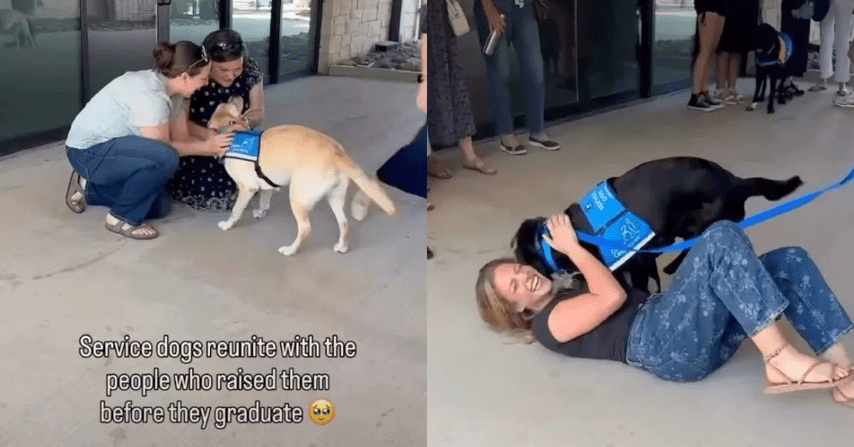
Since 1975, Canine Companions has been pairing service dogs with adults, children, and veterans with disabilities — completely free of charge.
On August 21, the nonprofit shared a video on social media that quickly garnered over a quarter of a million views, with one Instagram user calling it “the best thing anyone will see on social media today.”
In the Instagram Reel, service dogs were given a chance to reunite with the volunteers who trained and raised them one last time before they “graduated.”
The emotional video was filled with a lot of happy whines, wagging tails, and one black labrador that completely knocked their former trainer onto the ground with excitement.
“So beautiful,” one person commented. “They can be a puppy one last time before heading out into the world with their person. Congratulations on puppy raisers, brand new service dogs, and new handlers.
“In my experience, they never forget you,” one dog trainer chimed in. “No matter how long you have to wait.”
Tami Kelly, a PR representative for Canine Companions, told Good Good Good that this tradition is a regular occurrence for dogs trained through the nonprofit.
“Right before they graduate as service dogs matched with a person who needs them, most of our dogs reunite with the volunteers who raised them from eight weeks to about 18 months of age,” Tami Kelly said via email. “These reunions are so heartwarming.”
According to Kelly, less than 1% of people with disabilities have a service dog.
“Canine Companions is battling a global shortage of service dogs that can only be solved by recruiting more volunteer puppy raisers,” she said. “More than 500 people are currently waiting for a Canine Companions service dog, with thousands more in need.”
To support Canine Companions’ mission, or become a service dog trainer yourself, you can learn more at the organization’s official website.
By CNBCTV18.com August 25, 2026, 7:38:18 AM IST (Updated)
Submitted by Pam Peterson
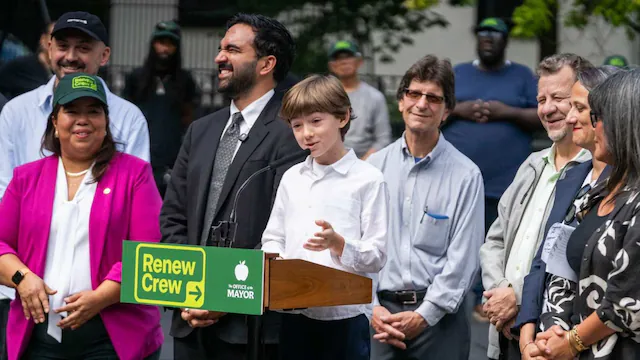
When eight-year-old Maxime recorded a video asking New York Mayor Zohran Mamdani to help reopen his neighbourhood playground, he was hoping to get one park back.
The playground at McKinley Park in Brooklyn had been closed for almost two years. A couple of weeks after Maxime made his appeal, it reopened. Now, his experience has become an early example of what Mamdani’s new Renew Crew is designed to do: fix the smaller but highly visible problems in New York City’s parks without making residents wait months for a larger capital project
At the launch of the 24-member team, Maxime thanked Mamdani and NYC Parks for “hearing me out” and helping bring the playground back.
What is Renew Crew?
Mamdani has brought together 24 plumbers, painters, electricians and other skilled tradespeople as part of the Renew Crew, which will carry out repairs at playgrounds, sports courts and recreation centres across the city’s five boroughs. The team is intended to handle relatively small repair and maintenance jobs that can otherwise get caught up in longer capital-project timelines. The city says it aims to complete each project in three weeks or less, with the crew expected to take on as many as 30 projects a year.
“The only thing worse than waiting for your turn on the swings is waiting for the swing to be fixed,” Mamdani said at the launch. “New Yorkers shouldn’t have to wait months for the basic repairs that make our parks better.”
From broken equipment to damaged courts
The Renew Crew’s first project is already underway at Dry Harbor Playground in Queens.Workers are repainting two basketball courts and play equipment and repairing benches, fencing, a drinking fountain and other park facilities. The work also includes repairs to shuffleboard, bocce and horseshoe courts and the park house exterior. Crews are also carrying out tree pruning, mulching and other horticulture work, including improvements around the park’s 9/11 memorial. Other projects have been identified at Fort Four Playground in the Bronx, American Playground in Brooklyn, Annunciation Playground in Manhattan and Old Town Playground on Staten Island. The programme is aimed at problems ranging from damaged playground equipment and sports facilities to broken amenities, fences and other park infrastructure.
$2.3 million for faster fixes
The programme has a $2.3 million budget this year, according to The New York Post. The newspaper also reported that more than 5,000 complaints about deteriorating recreation areas had been made through the city’s 311 system over the past year. Mamdani has urged New Yorkers to use 311 to report broken facilities, saying the Renew Crew will be dispatched to address them. The mayor announced the initiative with a blunt message on X: “Broken equipment and broken promises. New Yorkers deserve better from their government.” Renew Crew is separate from the city’s larger capital programme for parks. In March, Mamdani’s administration announced $50 million in capital investments across 10 parks, aimed at larger-scale reconstruction and improvements. The distinction is one of speed and scale: while major capital projects are meant to address substantial reconstruction needs, Renew Crew is designed to deal with everyday repairs quickly.
Submitted by Pam Peterson
PUBLISHED:
JAN 17, 2022 12:03 PM
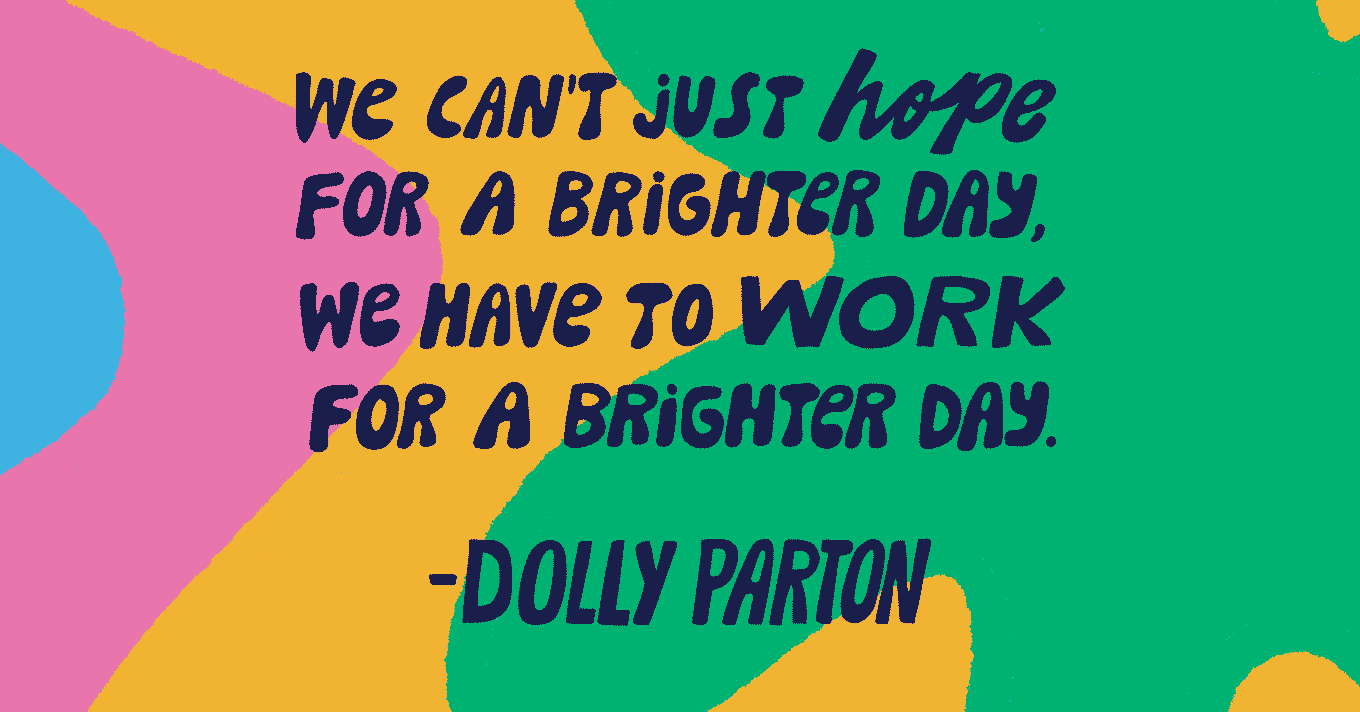
We all know and love Dolly Parton for her incredible music, her iconic style, and her funny quips — but Dolly is so much more than all of that.
As the founder of the nonprofit Dolly Parton’s Imagination Library, she’s responsible for 1 million children receiving free books in the mail every month, playing a huge role in early childhood development.
Through her career, she has continually shown up as an advocate (and icon) for LGBTQ+ rights. On top of that, she helped fund (and publicly support) the Moderna vaccine and keeps showing up to support communities after natural disasters. And all of that is somehow barely scratching the surface on Dolly’s philanthropy.
Somehow, through all of this, she has maintained an incredibly high approval rating.

DOLLY PARTON / PHOTO COURTESY OF THE LIBRARY OF CONGRESS, MUSIC DIVISION
https://www.goodgoodgood.co/articles/best-dolly-parton-quotes-about-life

By Danny Westneat Seattle Times columnist
It won’t go down as one of the higher moments in foreign diplomacy.
It did hint, though, at how low relations with our northern neighbors might go.
At a news conference, Ontario provincial premier, Doug Ford, was asked whether he’d like to walk back his suggestion, made earlier that day, that President Donald Trump could “kiss my ass as far as I’m concerned.”
“No,” Ford said, then he heartily invited Trump for another round of bum-bussing.
What was most interesting about this moment was the reaction. None of the Canadians at this event, called to sternly denounce U.S. tariffs, looked startled or even the slightest bit uneasy.
The construction workers arrayed behind Ford all chuckled and nodded appreciatively, as if he’d given a wedding toast. Ford grinned and looked positively … cheeky. It was said that even the businesslike Canadian prime minister, Mark Carney, didn’t disapprove of these crude invitations to the U.S. leader.
What is going on here?
“They’re not scared of Donald Trump anymore — that’s my sense of the situation. I think Canadians were always expecting another big Trump fight to erupt. So they’re used to it now.”
That’s Len Saunders, an attorney in Blaine, a town on Washington state’s border with Canada. He’s become a sort of “border whisperer,” as he’s a dual citizen, born in Canada, who crosses the line almost daily as part of his legal work.
Last year, Canadians were rattled. They said they had “elbows up” after Trump called their country “the 51st state.” But the truth is they were on their heels.
Now, not so much. Now they’re turning their backs to him — or their backsides, anyway.
Saunders said Canadians today are resigned to waiting out the indignities of the Trump term. They see how Trump’s bluster is wearing thin, including inside America.
Example: The Rupert Murdoch-owned Wall Street Journal called the tariff fight with Canada the “dumbest trade war in history.” Then it went further.
“It got dumber,” the Journal said this weekend, “as Mr. Trump escalated with another round of border taxes on Canadian imports, a mere 10 weeks before midterm elections.”
If you’re keeping track at home, that makes it dumber than the dumbest.
“One reason for Mr. Trump’s frigid approval rating is that voters believe Mr. Trump is waging blunderbuss wars without a strategy, and on trade they’re right,” the Journal concluded. (continued on page 2 or here)
Submitted by Ed Marcuse
Today at 1:27 p.m.

After reports surfaced of rare cases of myocarditis following COVID-19 vaccination, some parents worried that mRNA vaccines might cause heart disease in their children.
But a study published last week in Vaccine looking at more than 4 million children and young adults concludes that those who receive a Pfizer/Biotech COVID-19 vaccine have a lower risk of myocarditis (inflammation of the heart muscle), pericarditis (inflammation of the sac surrounding the heart), and death than those who do not.
“Public debate has focused on the cardiac risk of vaccination alone. Our findings reframe that discussion by comparing vaccination risk with infection-associated risk in the same healthcare network,” wrote the authors, led by researchers at SUNY Upstate Medical University.
“For patients and families, the key message is that myocarditis was rare after both exposures, but recorded myocarditis, pericarditis, and all-cause mortality were consistently more frequent after SARS-CoV-2 infection than after BNT162b2 vaccination,” they added.
The scientists conducted a retrospective, multicenter cohort study of the electronic health records of nearly 4.1 million people ages 16 to 25 from December 1, 2020, to September 30, 2025.
Participants fell into one of four groups. The first group included about 3.6 million (87.7%) vaccine- and COVID-naive young people. The second group consisted of 248,546 (6.1%) unvaccinated and infected teens and young adults.
Those who received a vaccine but never had COVID (241,152 youth [5.9%]) made up the third group. And the last group (10,677 [0.3%]) had hybrid immunity, because they had contracted COVID-19 prior to vaccination.
For patients and families, the key message is that myocarditis was rare after both exposures, but recorded myocarditis, pericarditis, and all-cause mortality were consistently more frequent after SARS-CoV-2 infection than after BNT162b2 vaccination.
Being unvaccinated and infected was associated with the highest risk of mortality, pericarditis, and myocarditis, while being vaccinated but uninfected was tied to the lowest risk of those three outcomes.
“Clinicians should communicate these findings using both absolute and relative risks: the absolute risk of myocarditis was low, but the observed risk was higher after infection than after vaccination,” the authors wrote. “This framing acknowledges vaccine-associated myocarditis as a real but uncommon event while also conveying that infection itself carries a greater cardiac risk.”
Submitted by Pam Peterson

| Today, we sit down with Washington’s Secretary of State, Steve Hobbs, to talk about what voters need to know ahead of the November election. Hobbs said that Washingtonians can still vote by mail, but because of changes in USPS postmarking policy, if it’s less than a week out from the election you should visit a drop box to ensure your ballot will be counted. Hobbs also provided assurances that the state’s election system is very secure, and encouraged voters to visit their local elections center to observe the process for themselves. |
Submitted by Bob Peterson


 Reload document
  Open in new tab