Mariner’s game in Sky Lounge at 1 PM tomorrow (Thursday the 13th)

Come watch the Mariner’s game for a few hours before going the the quarterly SRA meeting at 3:30 PM. It’s a chance to meet and greet and cheer for the M’s. BYOB and snacks (and please clean up!).

Posted in Sports | Comments Off on Mariner’s game in Sky Lounge at 1 PM tomorrow (Thursday the 13th)

Why Your Social Life Is Not What It Should Be

Ed note: We got an important recent reminder from Cornelius that “Post COVID Self Imposed Isolation” is a sad reality. How can we bring more joy into gathering together, introducing ourselves to a new move-in, do less take-outs, etc. We are social animals. So what are your ideas. Here’s one. How about Mariner’s fans gather in the Sky Lounge on Thursday to watch the playoff game together? BYO drinks and snacks!

by David Brooks in the NYT (thanks to Mary M.)

One day Nicholas Epley was commuting by train to his office at the University of Chicago. As a behavioral scientist he’s well aware that social connection makes us happier, healthier and more successful and generally contributes to the sweetness of life. Yet he looked around his train car and realized: Nobody is talking to anyone! It was just headphones and newspapers.

Questions popped into his head: What the hell are we all doing here? Why don’t people do the thing that makes them the most happy?

He discovered that one of the reasons people are reluctant to talk to strangers on a train or plane is they don’t think it will be enjoyable. They believe it will be awkward, dull and tiring. In an online survey only 7 percent of people said they would talk to a stranger in a waiting room. Only 24 percent said they would talk to a stranger on a train.

But are these expectations correct? Epley and his team have conducted years of research on this. They ask people to make predictions going into social encounters. Then, afterward, they ask them how it had gone.

They found that most of us are systematically mistaken about how much we will enjoy a social encounter. Commuters expected to have less pleasant rides if they tried to strike up a conversation with a stranger. But their actual experience was precisely the opposite. People randomly assigned to talk with a stranger enjoyed their trips consistently more than those instructed to keep to themselves. Introverts sometimes go into these situations with particularly low expectations, but both introverts and extroverts tended to enjoy conversations more than riding solo.

It turns out many of us wear ridiculously negative antisocial filters. Epley and his team found that people underestimate how positively others will respond when they reach out to express support. Research led by Stav Atir and Kristina Wald showed that most people underestimate how much they will learn from conversations with strangers.

  • Did you know you can share 10 gift articles a month, even with nonsubscribers?

Share this article.

In other research, people underestimated how much they would enjoy longer conversations with new acquaintances. People underestimated how much they’re going to enjoy deeper conversations compared to shallower conversations. They underestimated how much they would like the person. They underestimated how much better their conversation would be if they moved to more intimate communications media, like talking on the phone rather than texting. In settings ranging from public parks to online, people underestimated how positively giving a compliment to another person would make the recipient feel.

We’re an extremely social species, but many of us suffer from what Epley calls undersociality. We see the world in anxiety-drenched ways that cause us to avoid social situations that would be fun, educational and rewarding.

It’s not just talking to strangers. Epley and his team asked people to compliment a friend or a family member. People consistently underestimated how positively their recipients would react.

In one experiment visitors to a skating rink in downtown Chicago were given a coupon for a cup of hot chocolate and were asked to give it away to a stranger. The givers anticipated that the gift would make the others feel good, but they underestimated how “big” this gesture would feel to the other person.

Many of these misperceptions are based on a deeper misperception. It’s about how people are seeing you. Entering into a conversation, especially with strangers, is hard. People go in with doubts about their own competence: Will they be able to start a conversation well, or communicate their thoughts effectively?

But research suggests that when people are looking at you during a conversation, they are not primarily thinking about your competence. They are thinking about your warmth. Do you seem friendly, kind and trustworthy? They just want to know you care.

Epley’s research illuminates a mystery I’ve been thinking about for a while. Many of us have been writing about the breakdown of social relationships. Books now appear with titles like “The Lonely Century,” “The Crisis of Connection,” and “Lost Connections.”

But mass loneliness is a perversity. If a bunch of people are lonely, why don’t they just hang out together? Maybe it’s because people approach potential social encounters with unrealistically anxious and negative expectations. Maybe if we understood this, we could alter our behavior.

My general view is that the fate of America will be importantly determined by how we treat each other in the smallest acts of daily life. That means being a genius at the close at hand: greeting a stranger, detecting the anxiety in somebody’s voice and asking what’s wrong, knowing how to talk across difference. More lives are diminished by the slow and frigid death of social closedness than by the short and glowing risk of social openness.

The question is, can we get better? I spoke to Epley about his work last week and found it extremely compelling. Then this week I was on a plane and found myself … putting on headphones. But Epley assures me that this research has transformed how he lives. Once you get used to filling your day with social exercise, it gets easier and easier, and more and more fun

Posted in Uncategorized | 1 Comment

Your monthly update of news and events from the UW Memory and Brain Wellness Center and the UW Alzheimer’s Disease Research Center (ADRC)

Click here for the newsletter

Posted in Dementia, Education | Comments Off on Your monthly update of news and events from the UW Memory and Brain Wellness Center and the UW Alzheimer’s Disease Research Center (ADRC)

The 8th District Debate – 10/28 at 7 PM

Thanks to Put B.

CityClub is one of the participating organizations.  The debate will be held at CWU, and broadcast on KING, KOMO, FOX13, KUOW and KCTS9.

As you no doubt know, the candidates are Matt Larkin (R) and Kim Schrier (D).

Many Skyline residents might like to watch this even though we aren’t located in the 8th.

Posted in Politics | Comments Off on The 8th District Debate – 10/28 at 7 PM

Freeway Park annual autumn neighborhood clean-up

This Saturday, October 15th, join the Freeway Park Association and First Hill Improvement Association for our annual autumn neighborhood clean-up! Help us beautify our community by picking up litter around Freeway Park and the First Hill neighborhood.

Trash bags, trash pickers, coffee and treats will be provided. Participants are encouraged to join us for the full two hours, or just as long as you’re able to help out. Meet in Freeway Park’s Seneca Plaza at 10am (closest entrance at 600 Seneca Street).

A flyer for the event is attached.

RSVP on Facebook here.

Thanks,

Shane Crawford (he/him)

Operations Coordinator

www.freewayparkassociation.org

Posted in In the Neighborhood, Parks | 1 Comment

Dominoes

Thanks to Pam P.

Posted in Uncategorized | Comments Off on Dominoes

Pure Pleasure

Thanks to Mike C.

Posted in Sports | Comments Off on Pure Pleasure

‘The Cash Monster Was Insatiable’: How Insurers Exploited Medicare for Billions

Ed note: Privatizing Medicare has perverted the incentives to provide good care at a reasonable cost. The insurance companies quickly discovered if they could claim (often fraudulently) that its enrollee patients had multiple sickness, they could rake off huge profits from Medicare. This article exposes the need for reform.

By next year, half of Medicare beneficiaries will have a private Medicare Advantage plan. Most large insurers in the program have been accused in court of fraud.

By Reed Abelson and Margot Sanger-Katz Oct. 8, 2022 in the New York Times

The health system Kaiser Permanente called doctors in during lunch and after work and urged them to add additional illnesses to the medical records of patients they hadn’t seen in weeks. Doctors who found enough new diagnoses could earn bottles of Champagne, or a bonus in their paycheck.

Anthem, a large insurer now called Elevance Health, paid more to doctors who said their patients were sicker. And executives at UnitedHealth Group, the country’s largest insurer, told their workers to mine old medical records for more illnesses — and when they couldn’t find enough, sent them back to try again.

Each of the strategies — which were described by the Justice Department in lawsuits against the companies — led to diagnoses of serious diseases that might have never existed. But the diagnoses had a lucrative side effect: They let the insurers collect more money from the federal government’s Medicare Advantage program.

Medicare Advantage, a private-sector alternative to traditional Medicare, was designed by Congress two decades ago to encourage health insurers to find innovative ways to provide better care at lower cost. If trends hold, by next year, more than half of Medicare recipients will be in a private plan.

Soon, Half of Medicare Will be Privatized Medicare Advantage is on track to enroll most Medicare beneficiaries by next year.

But a New York Times review of dozens of fraud lawsuits, inspector general audits and investigations by watchdogs shows how major health insurers exploited the program to inflate their profits by billions of dollars.

The government pays Medicare Advantage insurers a set amount for each person who enrolls, with higher rates for sicker patients. And the insurers, among the largest and most prosperous American companies, have developed elaborate systems to make their patients appear as sick as possible, often without providing additional treatment, according to the lawsuits.

As a result, a program devised to help lower health care spending has instead become substantially more costly than the traditional government program it was meant to improve.

Eight of the 10 biggest Medicare Advantage insurers — representing more than two-thirds of the market — have submitted inflated bills, according to the federal audits. And four of the five largest players — UnitedHealth, Humana, Elevance and Kaiser — have faced federal lawsuits alleging that efforts to overdiagnose their customers crossed the line into fraud.

The fifth company, CVS Health, which owns Aetna, told investors its practices were being investigated by the Department of Justice.

In statements, most of the insurers disputed the allegations in the lawsuits and said the federal audits were flawed. They said their aim in documenting more conditions was to improve care by accurately describing their patients’ health.

Many of the accusations reflect missing documentation rather than any willful attempt to inflate diagnoses, said Mark Hamelburg, an executive at AHIP, an industry trade group. “Professionals can look at the same medical record in different ways,” he said.

The government now spends nearly as much on Medicare Advantage’s 29 million beneficiaries as on the Army and Navy combined. It’s enough money that even a small increase in the average patient’s bill adds up: The additional diagnoses led to $12 billion in overpayments in 2020, according to an estimate from the group that advises Medicare on payment policies — enough to cover hearing and vision care for every American over 65.

Posted in Health | Comments Off on ‘The Cash Monster Was Insatiable’: How Insurers Exploited Medicare for Billions

Biden Releases Marijuana Offenders from Prison to Make Room for Trump Administration

Thanks to Pam P.

   
“What’s worse, lighting up a spliff or stealing the nuclear codes? Come on, man,” President Biden said.   By Andy Borowitz  in the New Yorker

Posted in Uncategorized | Comments Off on Biden Releases Marijuana Offenders from Prison to Make Room for Trump Administration

October baseball is here!

Thanks to Mike C.

Posted in Sports | Comments Off on October baseball is here!

Holocaust survivor Francine Christophe shares her story

Thanks to Pam P.

In this video interview with Francine Christophe, a Holocaust survivor, you will learn about her experience as an eight-year-old Jewish girl at Bergen-Belsen camp. You’ll be amazed to learn about her selfless act, and the great reward that she experiences years after being liberated.

Posted in Caregiving, Essays, History, Mental Health, Social justice, War | Comments Off on Holocaust survivor Francine Christophe shares her story

Theater of War

Thanks to Ann M.

PARTICIPATE IN THE LIVE HYBRID BROADCAST!    
RSVP to tune in via Zoom: The Suppliants Project: Ukraine on October 3 at 7:00pm EDT  
The Suppliants Project: Ukraine, Notre Dame Forum
October 3, 2022
7:00 pm – 9:30 pm EDT


Suppliants Project: Ukraine will present dramatic readings of Aeschylus’ 

Suppliants live in-person in the University of Notre Dame’s iconic football stadium on Oct. 3 at 7 p.m. EDT—featuring professional actors and a chorus of Ukrainian students—to help frame guided discussions about the impact of war on individuals, families, and communities. Using a 2,500-year-old text as the catalyst for powerful, global dialogue, 

The Suppliants Project: Ukraine seeks to amplify and humanize the voices and perspectives of people whose lives have been touched by war, including refugees, students, activists, and artists from Ukraine and other countries, who participate in the performance and discussion, both in person and virtually from locations all over the world. The Oct. 3 event at Notre Dame represents the second installment of the project that seeks to engage both local and global audiences. 

The Suppliants is an ancient Greek play about a group of refugees who seek asylum in the city of Argos from forced marriage and violence. The play not only depicts the struggle of these refugees to cross a border into safety, but also the internal struggle within the country that ultimately receives them, as its citizens wrestle with how best to address the crisis at their border and whether to go to war on behalf of the refugees seeking their protection.  Featuring performances by Golden Globe-winning and Emmy Award-winning actor Anthony Edwards (Top Gun, E.R., Inventing Anna), Emmy Award-winning actor Keith David (NopeArmageddonThe Thing), actor Tate Donovan (Friends, The O.C., Hercules) and Ukrainian students from Ukrainian Catholic University in Lviv who are studying at the University of Notre Dame for the 2022 Fall Semester: Bohdana Yakobchuk, Kristina Bohdanova, Olenka Tsyhankova, Olha Droniak, Yaryna Pysko, Solomiia Rozlutska, and Sofia Dobko. This special event is presented as part of the Notre Dame Forum 2022-2023: War & Peace.

This event will be captioned in English and Ukrainian with audio interpretation in English and Ukrainian.     Facebook   Twitter   Link   Website
 
Posted in Social justice, War | Comments Off on Theater of War

Update from Heather Cox Richardson

Thanks to Diane C.

Loader Loading…
EAD Logo Taking too long?

Reload Reload document
| Open Open in new tab
Posted in Government, Politics | Comments Off on Update from Heather Cox Richardson

Will the last one ever fall?

Slide Show: Political Cartoons | The New Yorker
Posted in Government, Politics | Comments Off on Will the last one ever fall?

Mayor Bruce Harrell Releases Proposed 2023–2024 Human Services Department Budget

Today, Mayor Bruce Harrell released the 2023–2024 Proposed Budget for the City of Seattle. This budget reflects Mayor Harrell’s continued commitment to bold action on the priorities of our communities—investing to address urgent needs and emphasizing the essentials as we build One Seattle.

Mayor Harrell’s proposal invests in creating safe, healthy, and thriving communities by supporting efforts to deliver effective public safety, build housing, address the homelessness crisis, and drive opportunity and equity for all. This budget responds to the City’s ongoing and long-term revenue gap, as expenditures continue to exceed General Fund revenues, balancing immediate priorities with the resources available to respond and by identifying improvements and efficiencies.

With the investments in this budget proposal, we can work together to advance our shared One Seattle vision and an agenda that will inspire the best in our city and keep us moving forward. Thank you to all HSD staff and our community providers for your partnership in this work.

Human Services Department (HSD) is allotted $305M in the 2023–2024 Proposed Budget. The budget aligns with the Mayor’s top commitments of investing in community safety for all ($47.3M) and addressing homelessness with urgency and compassion ($108M). Further investments will aid the department in strengthening Seattle’s safety net through senior nutrition, increasing early learning capacity, and expanding community health.

The following is a summary of some of HSD’s key changes in the 2023–2024 Proposed Budget:

  • Community Safety Investments: The proposed budget prioritizes continued investments in safe communities and provides $5.8M in ongoing funding that address gun violence and community safety concerns; $1.4M in ongoing funding to continue programs supporting individual rejoining the community post incarceration; $1.25M in ongoing funding to support the Co-LEAD program; and a $1.25M one-time investment to open tiny house villages for Co-LEAD clients.  
  • Homelessness Investments: The City’s support for individuals experiencing homelessness is continued through $1.3M of ongoing funding to expand the Unified Care Team and increase system navigation support by 150 percent—helping individuals experiencing homelessness connect with shelter and services; $3.38M of ongoing funding for safe parking programs; $2.6M of one-time funding to establish new safe parking sites; $2.4M to open and operate new Tiny House Villages; and $1.2M to sustain operations at tiny house villages funded with one-time funding in 2022. Homelessness investments also include $88M to the King County Regional Homelessness Authority for outreach, shelter, and other critical programs. Excluding last year’s one-time federal dollars, this represents a 13 percent increase in the City’s investment in KCRHA.
  • Senior Nutrition: The City is investing in nutritious meals for all through $100K in ongoing funding to expand senior home delivered meals services.
  • Early Learning Capacity: The City is creating additional capacity for early centers through a $5M one-time investment in the development of the Rainier Valley Early Learning Campus.
  • Community Health: The City is supporting a healthier Seattle for all through $250k ongoing funding for reproductive healthcare access and $335k one-time funding in 2023 and 2024 for the Healthy Seattle Initiative.
  • Inflationary Increase for Community-Based Agencies: The City is providing an inflationary increase of nearly $7.3M in the proposed 2023 budget and $14.9M in 2024 for HSD’s contracted service providers to support equitable pay for employees and organizational capacity.

Over the next two months, the City Council will review the Mayor’s proposed budget. Public hearings are scheduled on Oct. 11, Nov. 8, and Nov. 15. Final adoption of the budget is expected on Tuesday, Nov. 22.

More information about details in the budget can be found at www.seattle.gov/budget. You can direct questions to MOS_COMMS@seattle.gov.

Posted in Advocacy, Government, Homeless, Poverty | Comments Off on Mayor Bruce Harrell Releases Proposed 2023–2024 Human Services Department Budget

What’s going on at 707 Terry?

707 Terry residential towers during the sunset

It seems kind of quiet at the twin “leaning” towers across from the Frye. Does anyone have specific information on the absence of workers there?

There are currently 24 active liens at this address with a reported total value of $53,237,520.54. Click here for the details.

Posted in In the Neighborhood | 3 Comments

Masking kids

Thanks to Mary Jane F.

Posted in Uncategorized | Comments Off on Masking kids

A puppy thinks he’s one of them!

Posted in Animals | Comments Off on A puppy thinks he’s one of them!

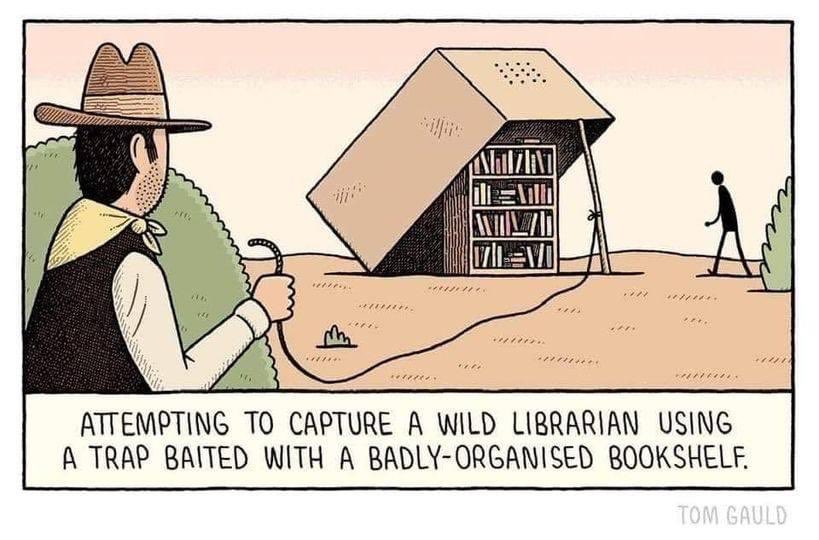
The best way to trap a librarian

Image
Posted in Humor | Comments Off on The best way to trap a librarian

Shanah Tovah (Oklahoma style)

Thanks to Mary Jane F.

Posted in Holidays, Religion | Comments Off on Shanah Tovah (Oklahoma style)

How trained is your dog?

Dog and Cat Cartoon Prints image 1
Posted in Humor | Comments Off on How trained is your dog?

They Were Entitled to Free Care. Providence Hounded Them to Pay.

Ed Note: This article raises the question about the blurred lines between a non-profit and for-profit organization. Some non-profits, like the Providence system, enjoy huge tax brakes and may not living up to their mission, moral or legal responsibilities.

On another note, a local non-profit, which may be of interest, has filed its publicly required 990 tax return.

From the New York Times by Jessica Silver-Greenberg and Katie Thomas

With the help of a consulting firm, the Providence hospital system trained staff to wring money out of patients, even those eligible for free care.

In 2018, senior executives at one of the country’s largest nonprofit hospital chains, Providence, were frustrated. They were spending hundreds of millions of dollars providing free health care to patients. It was eating into their bottom line.

The executives, led by Providence’s chief financial officer at the time, devised a solution: a program called Rev-Up.

Rev-Up provided Providence’s employees with a detailed playbook for wringing money out of patients — even those who were supposed to receive free care because of their low incomes, a New York Times investigation found.

In training materials obtained by The Times, members of the hospital staff were instructed how to approach patients and pressure them to pay.

“Ask every patient, every time,” the materials said. Instead of using “weak” phrases — like “Would you mind paying? — employees were told to ask how patients wanted to pay. Soliciting money “is part of your role. It’s not an option.”

If patients did not pay, Providence sent debt collectors to pursue them.

More than half the nation’s roughly 5,000 hospitals are nonprofits like Providence. They enjoy lucrative tax exemptions; Providence avoids more than $1 billion a year in taxes. In exchange, the Internal Revenue Service requires them to provide services, such as free care for the poor, that benefit the communities in which they operate.

But in recent decades, many of the hospitals have become virtually indistinguishable from for-profit companies, adopting an unrelenting focus on the bottom line and straying from their traditional charitable missions.

To understand the shift, The Times reviewed thousands of pages of court records, internal hospital financial records and memos, tax filings, and complaints filed with regulators, and interviewed dozens of patients, lawyers, current and former hospital executives, doctors, nurses and consultants.

The Times found that the consequences have been stark. Many nonprofit hospitals were ill equipped for a flood of critically sick Covid-19 patients because they had been operating with skeleton staffs in an effort to cut costs and boost profits. Others lacked intensive care units and other resources to weather a pandemic because the nonprofit chains that owned them had focused on investments in rich communities at the expense of poorer ones.

And, as Providence illustrates, some hospital systems have not only reduced their emphasis on providing free care to the poor but also developed elaborate systems to convert needy patients into sources of revenue. The result, in the case of Providence, is that thousands of poor patients were saddled with debts that they never should have owed, The Times found.

Founded by nuns in the 1850s, Providence says its mission is to be “steadfast in serving all, especially those who are poor and vulnerable.” Today, based in Renton, Wash., Providence is one of the largest nonprofit health systems in the country, with 51 hospitals and more than 900 clinics. Its revenue last year exceeded $27 billion.

Posted in Business, Health, Law, Uncategorized | Comments Off on They Were Entitled to Free Care. Providence Hounded Them to Pay.

Bar etiquette

Thanks to Mike C.

A Portuguese, Spaniard, Dane, Finn, Swede, German, French, Italian, Belgian, Austrian, Czech, Polish, Russian, Afgani, Serbian, Brit, Irish, Scot, Sardinian, Corsican, Icelander, Belarian, Romanian, Yugoslavian, Hungarian, Ukrainian, Bulgarian, Turk, Morrocan, Algerian, Liberian, Sudanese, S. African, Zambian, Ethiopian, Bosnian, Nigerian, Angolan, Botswanian, Tanzanian, Saudi Arabian, Kuwaiti, Iranian, Iraqi, Pakistanian, Mongolian, Indian, Burman, Chinese, Cambodian, Laotian, Somalian, Yemen, Syrian, Israeli, Armenian, Philipino, Javan, Australian, Sri Lankan, Malaysian, Georgian, Taiwanese, Japanese, Vietnamese, Puerto Rican, Dominican Republican, Aruban, Jamacian, Cuban, Haitian, El Salvadorian, Guatamalan, Nicaraguan, Costa Rican, Panamanian, American, Canadian, Mexican, Argentinian, Chilean,  Bolivian, Peruvian, Columbian, Brazilian, Ecuadorian and a Venezuelan walk into a bar. The bartender looks up and says, “Sorry. I cannot serve you without a Thai.”

Posted in Humor | Comments Off on Bar etiquette

Hey Mariners, check your rear view mirror!

Thanks to Mike C.

Posted in Sports | Comments Off on Hey Mariners, check your rear view mirror!