
SEATTLE | Museum House (707 Terry Ave) | Two towers | 32 Stories | 330 ft | 100 m | Page 21 | SkyscraperCity Forum has many good photos and blog comments.

SEATTLE | Museum House (707 Terry Ave) | Two towers | 32 Stories | 330 ft | 100 m | Page 21 | SkyscraperCity Forum has many good photos and blog comments.
Thanks to Ann M. so alerting us. So sad. Click here for the story.
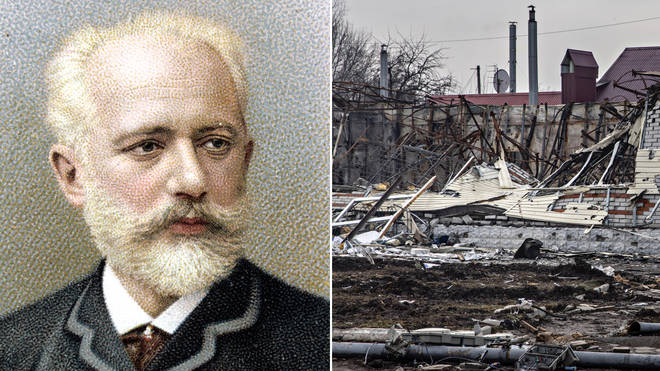
Thanks to Mary Jane F.

Thanks to Mike C.

Thanks to Al MacR.
To schedule your second booster, please call 844.520.8700.
Appointments are available at UW Medical Center – Montlake, UW Medical Center – Northwest, Harborview Medical Center, Valley Medical Center, and UW Medicine primary care clinics. We also continue to provide first and second vaccine doses as well as initial boosters for all eligible individuals at these locations.
Please note that for adolescents ages 12 to 17 only the Pfizer vaccine can be used. Children ages 5 to 11 are not currently eligible to receive a booster.
For more information about boosters, visit UW Medicine COVID-19 Updates & Information. If you have questions about whether a booster is appropriate for you, please contact your provider.
Thanks to Mary M. for finding this article. The neighborhood is facing yet another very large building! 🙁

Westbank will purchase the building which contains St. James’ pastoral outreach center at 907 Columbia as well as the archdiocesan chancery around the corner at 710 9th Avenue. The Archdiocese will find new digs to consolidate its 125 employees, the site yet to be determined. In turn, St. James will purchase from the Archdiocese two floors of Cathedral Place plus the old chancery building at 907 Terry Avenue, one of the city’s most familiar protest sites.
Westbank will build up to 1,300 “residential homes,” with the exact mix of apartments and condominiums yet to be determined. Click here for the full article.
Thanks to Pam P. – from the Goodnewsletter
Only two years ago, the border town of Laredo, Texas, was bracing itself for the construction of the towering steel and concrete border wall that threatened to cut off the city, its people, and the environment from its main water source — the Rio Grande River.
Diligent grassroots efforts by No Border Wall Coalition (NBWC) — a coalition composed of veterans, clergy, teachers, students, Indigenous leaders, and landowners — paved the way for the cancellation of unconstructed border wall contracts.
According to environmental nonprofit Earthjustice, this saved 71 miles of sensitive riverfront land and more than $1 billion in taxpayer funds.

This victory allowed the City of Laredo to propose and unanimously green-light plans for a binational river park — which is set to be developed where the border wall was once proposed to stand.
Ambassadors to the U.S. and Mexico, along with city officials from Laredo, and Nuevo Laredo, Tamaulipas — affectionately called the “Sister Cities” — are working together to transform their shared river into an ecological restoration project.
This historic binational project will span approximately 6.3 miles and focus on strengthening the conservation of the Rio Grande River while creating a community recreation and education space that stands to represent the unique and interconnected relationship between these two border cities.
As of February 2022, Laredo City Council and members of the Binational Working Group — a public-private consortium — formally announced that San Antonio-based architecture and urban design firm Overland Partners will be working alongside local partner Able City to create conceptual design plans for the first phase of the ecological restoration project.
“We are inspired by the Binational River Park and excited by the unique challenges an aspirational project of this magnitude presents – environmentally, socially, and culturally,” Rick Archer, senior principal and CEO at Overland Partners told The Architect’s Newspaper.
“Together with our partners and stakeholders, we want to create an international cultural destination and model for cooperation, conservation, and community.”
According to architecture, interiors, and design magazine Dezeen, the park will be made up of three areas: a 2.5-mile-long ecological restoration area northeast of the cities, a mile stretch in the urban cores along the river that will be framed by bridges and feature an amphitheater, and lastly, a recreation area that is proposed to stretch for three miles and lead pedestrians to the Nuevo Laredo Zoo.
Although this project is currently in its early stages, its envisioned to be comparable to San Antonio’s famed River Walk.
Thanks to Ed M.
Ed note: Second booster shots are now available in many pharmacies. Most recommend calling or going on their web site to make an appointment.
 Loading…
Loading…
Loading…

There are rivalries, then rivalries. This is one of the best in basketball. Read the commentary in the NYT here. Thanks to Mike C.
COVID Symposium XXVI
The Marginalian (formerly Brain Pickings) by Maria Popova
Ed note: This is a rather “heavy” entry but a friend who’s in the midst of a crisis, sent this story. It brought me back to a Russian lit course in college and plowing through Dostoyeveky’s “Notes from the Underground.” Dostoyevsky seemed to be saying, we’re not truly alive unless we’re in pain – a truly morbid thought! But this essay brings us away from the darkness by discovering, “And it is so simple… The one thing is — love thy neighbor as thyself — that is the one thing. That is all, nothing else is needed. You will instantly find how to live.”
One November night in the 1870s, legendary Russian writer Fyodor Dostoyevsky (November 11, 1821–February 9, 1881) discovered the meaning of life in a dream — or, at least, the protagonist in his final short story did. The piece, which first appeared in the altogether revelatory A Writer’s Diary (public library) under the title “The Dream of a Queer Fellow” and was later published separately as The Dream of a Ridiculous Man, explores themes similar to those in Dostoyevsky’s 1864 novel Notes from the Underground, considered the first true existential novel. True to Stephen King’s assertion that “good fiction is the truth inside the lie,” the story sheds light on Dostoyevsky’s personal spiritual and philosophical bents with extraordinary clarity — perhaps more so than any of his other published works. The contemplation at its heart falls somewhere between Tolstoy’s tussle with the meaning of life and Philip K. Dick’s hallucinatory exegesis.

The story begins with the narrator wandering the streets of St. Petersburg on “a gloomy night, the gloomiest night you can conceive,” dwelling on how others have ridiculed him all his life and slipping into nihilism with the “terrible anguish” of believing that nothing matters. He peers into the glum sky, gazes at a lone little star, and contemplates suicide; two months earlier, despite his destitution, he had bought an “excellent revolver” with the same intention, but the gun had remained in his drawer since. Suddenly, as he is staring at the star, a little girl of about eight, wearing ragged clothes and clearly in distress, grabs him by the arm and inarticulately begs his help. But the protagonist, disenchanted with life, shoos her away and returns to the squalid room he shares with a drunken old captain, furnished with “a sofa covered in American cloth, a table with some books, two chairs and an easy-chair, old, incredibly old, but still an easy-chair.”
Thanks to Sybil-Ann
Loading…
From Linda W.
As you no doubt read, those of us over 50 (ha!) are now eligible to have a second booster. Bartells (and likely many other sites) are offering this service (as the vaccine becomes available – not at the store today per a resident phone call). Bartells prefers you call for an appointment at 206-340-1066. To get through the pharmacy phone tree, press “0”, then when prompted press “1” to speak to the pharmacy directly. We don’t have a date as to when Skyline may offer the booster, but for those traveling or at high risk probably not delaying too long is wise.
Hello all,
I made a YouTube video, about half the length of my talk, leaving out the Skyline-specific material.
I will be giving a talk about recharging electric vehicles in Skyline garages in the Science-Technology lecture series on April 19th at 3:30pm. What follows is aimed at preparing for the Q&A after my presentation. I have been writing an eight-page “consultant’s report” as I recall details from my EV education a decade ago when recharging was more iffy. You can access a PDF of it at WilliamCalvin.com/EV/. Here is the last page:
Take your 15-minute rest stops at Level 3 DC Fast chargers (or Tesla superchargers). Around town, just top up every night using an ordinary 110-volt outlet.
A fill-up makes sense with liquid fuels and also with overnight recharging—but the EV charging rate varies with how full the EV battery already is; doing ¾ to full takes much longer with an EV. The strategy for minimizing recharging time on a road trip is to routinely find a Level 3 changer or Tesla Supercharger when at ¼ full— but, when impatient, stop recharging at ¾ and hit the road.
That’s still true if one’s EV does not have an electrified parking space for 8 hours every night (or during the working day). Otherwise, simply top up overnight, every night—there will be a full ‘tank’ every morning, even with 110v charging. Unless one is just back from a long drive and about to leave on another long leg in the morning (that has happened to me once in the past ten years), one is going to be drawing many little sips, not one fast overnight gulp needing 220v Level 2 chargers. After you lock your car, hook up the Level 1 charging cable (dangling nearby) before walking away. It is just like those parking meters with electrical outlets that you see in Jasper, where cars need an electrical heater to keep the radiator and oil pan from freezing.

EV Economic, Health, and Safety Advantages
At least in Seattle, it costs about $5-10 to fully recharge a large EV to 250-mile range, versus $100+ to fill a gas tank.
EVs also have many fewer items to routinely service: no oil to change, no transmission, no muffler and catalytic converter, and infrequent brake pad replacement because most of the braking is done with recharging the battery, Prius style.
Some EVs, such as the Tesla Model S, were redesigned from scratch to better protect the driver and passengers with crumple space up front. Dual-motor Teslas are excellent at automatically recovering from swerves and skids. And because Teslas are designed to be bottom-heavy, they seldom roll over. Most other EVs, however, just fill the empty engine compartment with heavy batteries.
EVs do not produce tailpipe air pollution to breathe. Try to drive behind an EV whenever possible.
It isn’t just Tesla (though I still think they are the best). Here is a table of EVs.

Thanks to Mary Jane F.

Yesterday, the people seemed to outnumber the blossoms. Everyone was enjoying a peaceful and pleasant touch of spring.

Thanks to Ed M.

By Danny Westneat Seattle Times columnist
With 171 years of life experience between them, including about 80 managing hospitals and rocket systems, Ruth Benfield and John Pehrson have seen a thing or two.
Benfield was a vice president at Seattle Children’s hospital, overseeing that facility’s master development plan. Pehrson was the program manager of missiles and spacecraft at Boeing’s Kent Space Center.
So when the two retirees, now neighbors, put their heads together on a homelessness aid project in their South Lake Union neighborhood, they figured: How impossible of a task can this be?
“We’ve navigated a lot of bureaucracy in our day,” says Pehrson, 95. “This system is something else.”
Their odyssey started more than a year ago, when some of the 400-plus residents at Seattle’s Mirabella retirement center suggested they all pool their resources to help out with the city’s homelessness crisis.
The pitch they hit on was unique, the opposite of “not in my backyard.” They told the city: If you put a homeless shelter next to us, we’ll raise the money to help pay for it.
With the encouragement of multiple Seattle city council members, they raised $143,000 from Mirabella residents in about four weeks, and another $100,000 was pledged by a South Lake Union developer. That was enough for about half the capital startup costs for a temporary emergency site, a 40-unit tiny house village, which was proposed about a block from the Mirabella at a leftover City Light lot that has sat mostly vacant for years.
“We’re old and have a lot of time on our hands, so we could cook meals for them and make lunches and do clothing drives,” Pehrson said. “It would be right down the block. So people here were very excited about finally being able to do something to help.”
The rest of the money needed was just sitting there — in the form of $2 million in grants the state had already given Seattle, earmarked for “tiny houses and cottages.”
But maddeningly it stayed sitting there, unspent, all last year. It’s the same money that’s now the subject of dispute and intrigue, having been transferred by the city in January to a new regional homelessness agency, where it was awarded to other aid projects, only to be pulled back by an edict from Rep. Frank Chopp, D-Seattle.
It isn’t clear what’s going to happen with those grants now, or when they may be spent. The city says it wants to move on though and use the abandoned lot near the Mirabella for other City Light work. So unless a new spot is found, the $143,000 these volunteers raised will be returned, donation by donation, back to Mirabella’s residents.
All this in the middle of a declared homelessness emergency.
“Most of 2021 and now the first part of 2022 has been wasted,” Pehrson said. “I know what it’s like to have an emergency at work — we’d have a stand-up meeting about it every day. I mean everybody would be standing. They’re not acting like this is a crisis.”
Says Benfield, 76: “We could have already sheltered people all through last winter. We’re not experts, so we had only two questions: ‘How do we get this done? How do we help?’ The city slow-walked their response until it all went nowhere.”
The city says it didn’t award the grants last year because it was winding down its homelessness work to turn it over to a new Regional Homelessness Authority. Ironically that group was set up in part to remove parochial politics from the equation. It’s now mired in even thicker politics with Seattle lawmaker Chopp.
As reported by The Seattle Times’ Scott Greenstone, Chopp big-footed the $2 million in grants back to Seattle’s Low Income Housing Institute — a nonprofit he co-founded — which manages the city’s tiny house villages, and would also have managed the proposed one near the Mirabella.
But the regional group, which is now in charge, clearly does not favor tiny house villages as a shelter strategy. Also they said they hoped to “diversify” by including other nonprofits.
The Mirabella folks are like a benevolent ladybug that flew into a spiderweb.
“I see people working very hard at not solving the problem,” Benfield says. “The government agencies, the nonprofits, the politicians are caught up in power struggles. We sat in meeting after meeting where they were expending a lot of energy, but it was on maneuvering. They’ve lost sight of the goal.”
That goal is supposed to be helping people get up and off the streets. There are disagreements about how best to do that, which hopefully this new regional group will resolve. But c’mon, we’re more than six years into this emergency.
The city, the regional group and the nonprofits all say it’s a top priority to put a new shelter of some type in South Lake Union. Yet as of now there isn’t one planned. Despite this unprecedented volunteer push from the Mirabella residents.
Says Pehrson: “We set out to get an education and we got one.”
An honorary degree, in Seattle Process.
Thanks to Mike C.
Ed note: No comment! Add your own!

Thanks to Mary M. – an uplift we all need
Thanks to Jim S.
Professor Jeffry Sonnenfeld (Yale University) has developed a list of companies who did, or continue to do business in Russia. The list is divided into five categories, ranging from “Withdrawal” a clean break with to “Digging In” – those who are committed to retaining their involvement in Russia.
Since the invasion of Ukraine began, over 450 companies have announced their withdrawal from Russia—but some companies have continued to operate in Russia undeterred.
Originally conceptualized as a simple “withdraw” vs. “remain” list, our new list of companies now consists of five categories:
1) WITHDRAWAL – Clean Break: companies completely halting Russian engagements/exiting Russia;
2) SUSPENSION – Keeping Options Open for Return: companies temporarily curtailing operations while keeping return options open;
3) SCALING BACK – Reducing Activities: companies scaling back some business operations while continuing others;
4) BUYING TIME – Holding Off New Investments/Developments: companies postponing future planned investment/development/marketing while continuing substantive business;
5) DIGGING IN – Defying Demands for Exit: companies defying demands for exit/reduction of activities
Download the list as an excel spreadsheet by clicking below. (make sure to “download” the file from Box as an excel document rather than “previewing” for best file quality)
The list is updated continuously by Jeffrey Sonnenfeld and his team of experts, research fellows, and students at the Yale Chief Executive Leadership Institute to reflect new announcements from companies in as close to real time as possible.
Our list has already garnered extensive coverage for its role in helping catalyze the mass corporate exodus from Russia.
When this list was first published the week of February 28, only several dozen companies had announced their departure.
Hundreds of companies have withdrawn in the days since, and we are humbled that our list helped galvanize millions around the world to raise awareness and take action.
Although we are pleased that our list has been widely circulated across company boardrooms, government officials, and media outlets as the most authoritative and comprehensive record of this powerful, historic movement, we are most inspired by the thousands of messages we have received from readers across the globe, especially those from Ukraine, and we continue to welcome your tips, insights, and feedback.
Please refer to Jeffrey Sonnenfeld’s insights and commentary below on why our work matters.
https://som.yale.edu/story/2022/over-400-companies-have-withdrawn-russia-some-remain
Letter in the NYT – thanks to Mike C.
I don’t understand why we are not talking about this:
Remember that Paul Manafort, Donald Trump’s former campaign manager, worked for the pro-Putin Ukrainian government. Remember when support for Ukraine was removed from the Republican Party platform in 2016. We thought it fishy then; well, now it’s beginning to smell even more.
President Trump withheld approved funding to Ukraine and tried to blackmail President Volodymyr Zelensky into providing a political favor — a corruption investigation into Joe Biden.
Mr. Trump wanted the U.S. to withdraw from NATO He devised a plan, reversed by President Biden, to take troops out of Germany. And all of this seemed completely bonkers at the time.
Now Mr. Trump called Vladimir Putin a “genius” as he invaded Ukraine. At what point do we seriously consider whether Mr. Trump is a Russian operative?
Janet Woodworth
Kirkville, N.Y.

 Reload document
  Open in new tab