Stuart Isett for Fortune Brainstorm Health / Flickr cc
It’s been three years since the World Health Organization declared an end to the COVID-19 public health emergency, but COVID still circulates worldwide. Does that mean the pandemic is still going on, just in a non-emergency phase? Or has COVID become an endemic virus, like the flu?
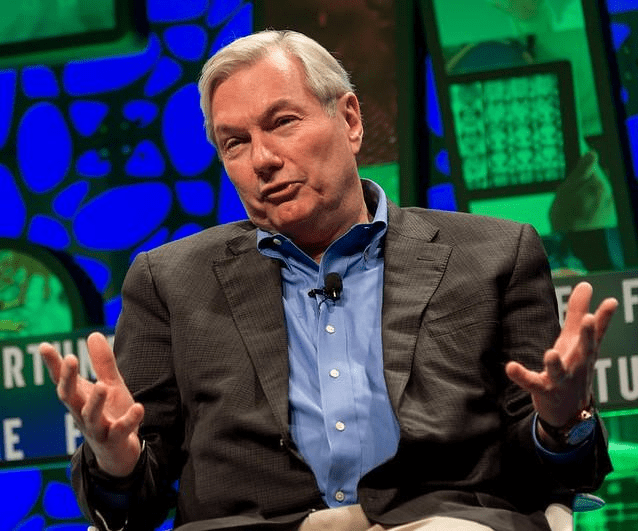
CIDRAP News talked with Center for Infectious Disease Research and Policy (CIDRAP) Director Michael Osterholm, PhD, MPH, to understand what defines a pandemic, if we’re still in one, and what gives a pathogen pandemic potential.
CIDRAP News: What exactly is a pandemic?
Michael Osterholm: There’s no magic answer to that question. From my perspective, I usually say the only examples we have in modern history are viral infections that are transmitted via the respiratory route, like the flu and COVID, because the dynamics of transmission make it a worldwide threat, and “worldwide threat” is important in defining a pandemic. A pandemic is not just something that happens in one localized area.
Plagues weren’t viruses, but, in the modern world, a pandemic is almost always a viral infection.
CIDRAP News: Why?
Michael Osterholm: Antibiotics could be an important part of why bacterial viruses aren’t as big of a threat today. But what’s really at the heart of it is what flu and COVID represent today in terms of risk—that is, slight changes in the virus result in increased susceptibility. And when there’s a major change in the virus, you virtually have no protection.
“A pandemic is almost always a viral infection.”
For a good example, look at influenza. Each flu pandemic was caused when there was a major shift in the genetics of the virus, so virtually no one was immune. If you look at COVID, it was very much the same thing.
CIDRAP News: Why were SARS (severe acute respiratory syndrome) and MERS (Middle East respiratory syndrome) not pandemics?
Michael Osterholm: Because they are not readily transmitted. We were able to bring them under control, basically with standard control measures that you would use for respiratory illness. And that’s good news because the case-fatality rate for SARS and MERS is between 15% and 35%. For COVID, the case-fatality rate was 1% to 1.5%.
CIDRAP News: So pandemics have less to do with severity and more to do with how transmissible a virus is?
Michael Osterholm: Both how transmissible it is and risk are important. For example, if you have a common cold virus for which we have no previous immunity suddenly spread around the world, most of us would not consider that a pandemic in the sense that it’s not a severe illness. So there’s an implied status of severe illness.
CIDRAP News: What’sthe difference between a pandemic and an epidemic?
Michael Osterholm: Epidemic relates back to the issue of transmission. For example, we have a major epidemic of Ebola going on right now, which surely has a high case-fatality rate. It’s a very serious illness, but it’s not readily transmitted via the respiratory route.
CIDRAP News: When does a pandemic start and end?
Michael Osterholm: The start of a pandemic is much easier to declare because it’s like a suddenly emerging out-of-control forest fire.
When you get to the point where you have these isolated fires all over the place, but they’re not really burning too much, you can say that’s when the pandemic is over. And that’s a much harder one to call.
CIDRAP News: Is the COVID pandemic still going on?
Michael Osterholm: No, I think we can safely say that we are now adjusting into a more routine cycle of infection. And you can argue that in several ways. First of all, there’s a much greater stability to the virus that we see now with so much background immunity in the population.
It’s similar to previous influenza pandemics, which were the hallmark pandemics we had prior to COVID. Clearly, they were situations where once a large portion of the population either got infected and died or got infected and recovered, there was a level of protection that, over time, basically won out over the virus itself.
‘Worldwide threat’ is important in defining a pandemic. A pandemic is not just something that happens in one localized area.
That’s why you still see the virus circulating, but in a way that, genetically, our body’s immune systems are largely able to take on. So again, if you look at the flu pandemics of the past, in every instance they just kind of faded away over time and became a background endemic disease.
And today we are in a much more steady-state existence with COVID because of our preexisting immunity and the relative lack of genetic change to the virus. We haven’t watched it go from the ancestral strain to Alpha, Beta, Delta, Gamma, or Omicron, like we did in those first four years.
CIDRAP News: I’m thinking about some of the notable pandemics that preceded the COVID pandemic. Is the AIDS pandemic still going on?
Michael Osterholm: AIDS is an unusual one in that it has its foot in both the pandemic and non-pandemic camps—and what I mean by that is that not everyone was at risk for HIV. If you didn’t have a sex partner who was infected, you did not have blood exposure, then you weren’t at risk for this.
So if 80% of the world is immune to it or not likely to be exposed, is that going to be a pandemic? But it still is widespread within each geographic region of the world, so it gets a little cloudier there.
So there are those who say HIV is not a pandemic, and those who say it is, or it was, a pandemic, and I agree with those who say it is. But you could claim either one.
CIDRAP News: What gives a pathogen pandemic potential, and what future pandemics are experts most worried about?
Michael Osterholm: A virus with respiratory transmission potential for which, upon a genetic change, could mean many, if not almost all, the population is susceptible. That’s why I coined the term “angel” or “virus with wings,” because basically the virus has to be in that mode to rise to the level of a pandemic.
Many other diseases surely can be a problem, but only that defines dynamic transmission in the community.
Also, it’s got to be a disease that is sustainable around the world. Take cholera, for example. In some places, cholera can be a very serious epidemic. But it’s not going to ever be a problem in Minneapolis-St. Paul [Minnesota].
CIDRAP News: What public health or preparedness lessons can we take away from the COVID pandemic?
Michael Osterholm: How poorly prepared we are for a future pandemic. There was no official review following up after COVID, so I feel like we’ve learned very little from the pandemic. And we’re hurting badly in terms of vaccine protection and preparedness.
And the one advance we have is mRNA technology, yet we see a large segment of the population refuses to accept that vaccine.
Posted inUncategorized|Comments Off on COVID is still here. Is the pandemic?
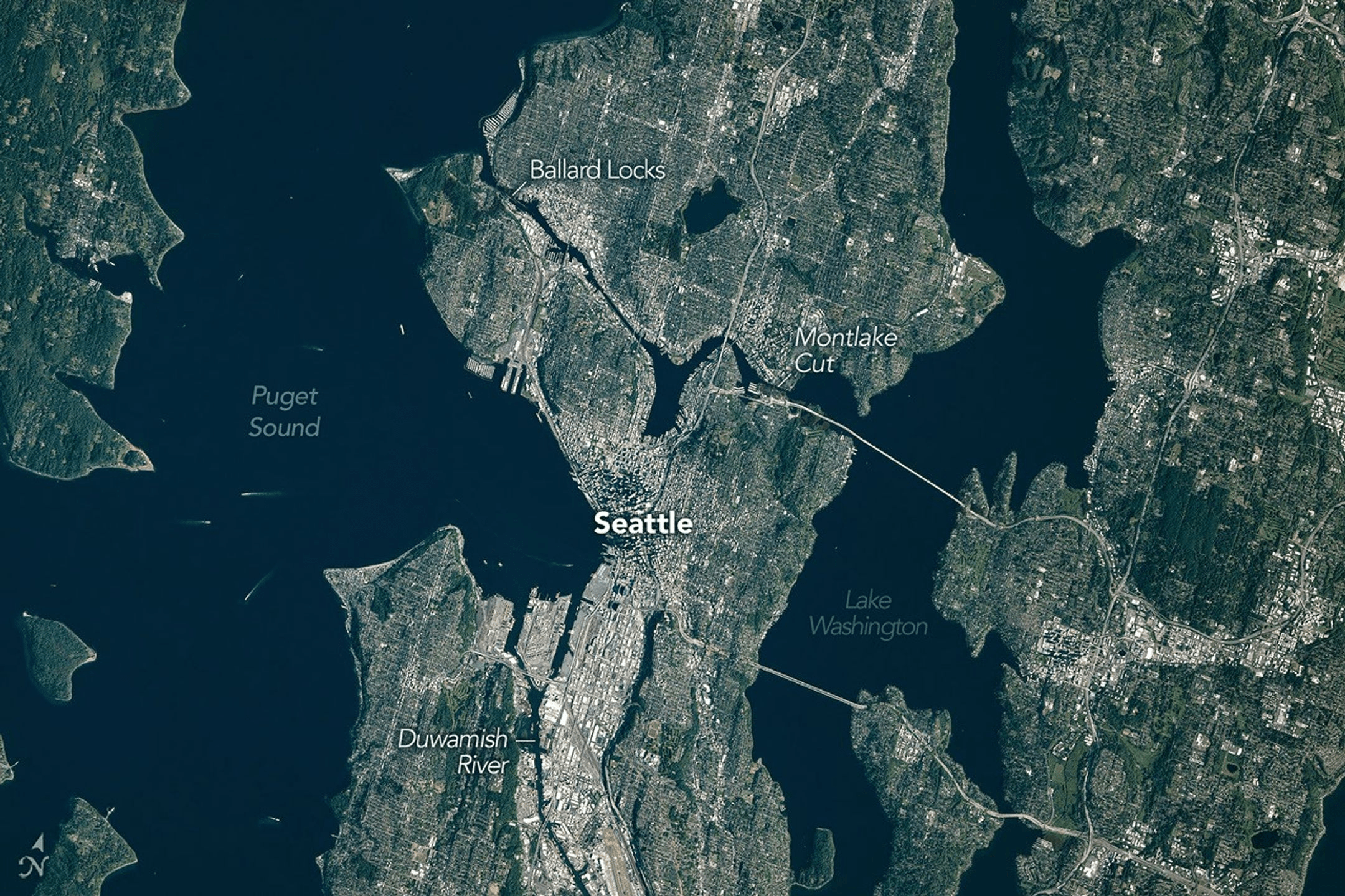
“On Monday, July 20, 2026 NASA featured a splendid photo of Seattle, for their Image of the Day. Pretty fun to see Seattle from space. Part of what stands out to me is the amount of green. I feel fortunate to live in a city with so many trees and park spaces.”
Seattle, Washington—sometimes known as the “Emerald City”—was glimmering in the morning sunlight when an astronaut aboard the International Space Station took this photo on June 16, 2026. The city’s parks and tree-filled neighborhoods lend a lush, green look to the metropolis, while tall buildings downtown cast long shadows and ships navigate surrounding waterways.
The broad contours of the city’s landscape and the water around it owe their shape to the advance and retreat of glaciers during the last ice age. Between roughly 18,000 and 16,000 years ago, the Puget lobe of the Cordilleran ice sheet covered the area in a mass of ice up to 3,300 feet (1,000 meters) thick. The glacier scoured the basins now occupied by Puget Sound and the region’s lakes.
The glacier left its mark above water, too. Several of Seattle’s notorious hills (of which there are seven or more, depending on who’s counting) are drumlins. These elongated mounds of glacial debris run north-south, parallel to the direction of the ice’s movement. East-west travelers in the city, facing challenging ups and downs, may attest to this topographic trend.
The ice also transported large boulders called glacial erratics from more northerly locations and deposited them around the region. A particularly large erratic, the Wedgwood Rock, stands about 20 feet (6 meters) tall and draws its name from the North Seattle neighborhood in which it rests.
June 16, 2026
In more recent times, humans have undertaken projects to rework the topography. Notable alterations include leveling Denny Hill north of downtown and filling in tideflats at the mouth of the Duwamish River south of downtown, which created around 1,300 acres of new land. Seattle’s professional sports stadiums sit atop this fill.
This photo was acquired after several development projects to update waterfront infrastructure downtown, initiated in 2010, were completed. These include a new ferry dock and terminal, a rebuilt seawall, and a tunnel to replace an above-ground highway and create more inviting public access to the waterfront.
Some replumbing of the region’s waterways is apparent from the astronaut’s perspective, as well. In the 1910s, the Army Corps of Engineers built canals on either side of Lake Union to connect Puget Sound (an inlet of the Pacific Ocean) with Lake Washington. Starting in 1916, the Montlake Cut connected Lake Washington to Lake Union, and the Ballard Locks, northwest of Lake Union, began raising and lowering watercraft between the freshwater lakes and tidal Puget Sound. As a result of this project, Lake Washington’s water level dropped about 9 feet (3 meters) and ceased draining from its natural outlet at its southern end.
Today, the waters in and around Seattle support many uses: container ships, cruise ships, car and passenger ferries, floatplanes, and recreational craft ply the sound and lakes. And as for Seattle’s emerald nickname, pockets of old-growth forest still exist within city limits, containing centuries-old trees such as Douglas fir, Western red cedar, and Western hemlock. Seattleites often spot wildlife such as bald eagles, coyotes, and sea lions in the city’s various habitats.
Astronaut photograph ISS074-E-723719 was acquired on June 16, 2026, with a Nikon Z9 digital camera using a focal length of 560 millimeters. It is provided by the ISS Crew Earth Observations Facility and the Earth Science and Remote Sensing Unit at NASA Johnson Space Center. The image was taken by a member of the Expedition 74 crew. The image has been cropped and enhanced to improve contrast, and lens artifacts have been removed. The International Space Station Program supports the laboratory as part of the ISS National Lab to help astronauts take pictures of Earth that will be of the greatest value to scientists and the public, and to make those images freely available on the Internet. Additional images taken by astronauts and cosmonauts can be viewed at the NASA/JSC Gateway to Astronaut Photography of Earth. Story by Lindsey Doermann.
Ed note: At the bottom of the photo taken by John Roper on his way to visit his son’s family in D.C. Center-left, you can spot the CT and OT just to the right of the freeway.
My good friend Andy Nettell has what I call the intention to attention. By this I mean that he goes outside seeking to be a good observer. He does this not only by reading up on the natural history of his chosen homeplace, Sequim, Washington, but also by carrying a camera with him. “Taking the camera with me has rekindled my sense of wonder. I know that this is an overused phrase, but it perfectly describes the practice of observing the natural world.”
Fullscreen image
I have known Andy for more than 35 years; we worked together as park rangers at Arches National Park in the early 1990s. He was always a good naturalist and good observer. He was also one of those classic park rangers who was great at sharing his knowledge with visitors and fellow staff members; for several years I had the good fortune of teaching natural history with him to new rangers and was impressed by what he knew and what he had seen.
But then he opened a bookstore. It allowed him to indulge his passion for antiquarian books and in building a community of people equally excited about the written word. Managing the store though took him away from his true love, being outdoors. Not that he was fully aware of this, until he sold the store a few years ago. “I hadn’t realized what I had lost being in the world of books,” he told me recently. “When I began to take pictures of birds again, though, I reawakened an entire world.”
We were talking about his work the other day, when my wife and I visited Andy and his wife. I had long been impressed with the bird photographs that he has been posting on Facebook and was curious about his process. I knew that he was a good birder, but he said that photography had taken him to a new level. He realized that if he wanted to get good photographs, he had to be intentional. “I had to learn about their behavior. I had to know where the birds would be and to plan ahead. I had to go out and watch and be patient.” In other words, Andy had to have the intention to paying attention to the natural world.
He illustrated this by describing a recent encounter he had had with Northern Harriers. Long known as Marsh Hawks, harriers are birds of the flats, floating gracefully over fields and meadows while scanning for critters such as mice and voles. Near Andy’s house is such an area, where he had seen harriers before. One time he had watched an adult male and female courting. The male had caught a mouse and, as part of his courtship, had presented it to the female on the wing. She then glided in for the love offering, which she nabbed in her talons.
Andy told me he had witnessed the prey transfer previously, which typically involved watching the birds for one to two hours. Getting these photos required patience, watching, listening for the birds’ calls, and a bit of luck.
Over the next several months, Andy continued to go back to the meadow, to watch harriers. The week before we arrived, he had seen four young birds. “They had none of the classic adult harrier behavior. Instead, they were perching and crying to each other and occasionally taking off and wheeling around. It looked as if they were learning what the wind could do.” At some point, an adult female flew in from the east. She called and within a second the four youngsters headed her way. She was about thirty feet off the ground. “I didn’t realize she had a mouse in her talons until she dropped it mid-flight. One of the kids tried for the mouse with his or her mouth and completely flubbed it,” Andy told me. All four young birds then dove to ground in search of the meal.
Young harrier trying to catch mouse with mouth instead of talons, as adults do it. Unlike with the adults, Andy did not know of this prey-transfer between generations so it was a pleasant to surprise when he saw it. Photo by Andy Nettell
For Andy, moments such as this are not really about the photographs. Yes, he loves to “nail the shot,” to come up with a wonderful image of what he has seen, but it’s more about the time outside, to being witness to the natural world. The camera is merely the instrument that provides a reason—not that he truly needs one—to go out and observe. His observations are a two way street. He has found that paying attention to the birds so carefully supplements what he has read and brings the birds more to life, which leads to better photographs.
Photography has also rekindled his concerns about birds and the perils they face. How do his actions impact birds? How can he work to benefit them? “Watching and documenting birds through photography has heightened my awareness of habitat loss and I have become passionate about doing what I can to preserve habitats whether it is supporting the local land trust, volunteering for citizen-scientist work or planting our yard to create habitat for birds, pollinators, butterflies, etc.”
As I noted, so many of Andy’s bird photographs are amazing. They were clearly taken by someone with a passion for birds and a gift for photography, but now I know that they were something more. They were illustrating the importance of getting outside, of paying attention, and of knowing the natural history. They were the product of his passion. They were the art of the intention to attention.
On Monday, July 20, NASA featured a splendid photo of my fair city, Seattle, for their Image of the Day. Pretty fun to see Seattle from space. Part of what stands out to me is the amount of green. I feel fortunate to live in a city with so many trees and park spaces.
Stuart Canin whips open the door to his Berkeley home and shakes my hand with the kind of solid clasp you’d expect from any lifelong violinist. While many in the Bay Area music scene know him as the celebrated former concertmaster of the San Francisco Symphony and first music director of the New Century Chamber Orchestra, history buffs may recognize him from his role in a unique performance right after World War II.
Canin, a Far Rockaway, Queens, New York native, was an army rifleman who thought to bring to war a cigar-box violin to “keep it in the fingers” while away from his famed teacher Ivan Galamian. Months later, he found himself on a balcony porch off a private home in Potsdam, Germany, with pianist Eugene List.
The mysterious task: Perform for President Truman. The date: July 17, 1945—what would later be known as day one of the Potsdam Conference.
I pick up a Brahms sonata now that I’ve played all my life and for some strange reason, I get a whole different look at it. You get, I think, closer to the composer’s intention as you mature. So, that’s how life goes. If you stay with it.
“Suddenly we heard automobile motors coming around the block and a bunch of limousines showed up and out of one stepped Joseph Stalin in his Marshall’s uniform,” Canin says, chuckling. “And Winston Churchill stepped out of the other. And Molotov, and Secretary of State Byrnes. Everybody who was ever on the front page of the New York Times came out of those cars and started into the house, and we said, ‘What’s this?’”
Hours later, the three titans—Truman, Churchill, and Stalin—sat on a small couch before the musicians. “And then Truman said, ‘Gentlemen, would you play something for us?’” Canin smiles as he recalls, “You could imagine, I was all of 19.”
Seventy-one years after the Potsdam concert, Canin was gearing up last November for a sold-out January Lincoln Center concert reenacting that exact program, to take place after the premiere of a documentary charting his role in the performance.
But Canin’s involvement in culturally significant moments hardly ended—or even began—with Potsdam. Canin, who, at the time of our interview looks forward to his 90th birthday in April, is warm and grounded as he glances back at his remarkable musical life.
Photo by Cristina Schreil
So, you picked up the violin at age five, correct?
My father actually picked it up. I didn’t know anything about the violin. [Laughs.] And he brought it home one holiday season and said, “Let’s try.” My father was absolutely nuts about the violin.
Did you take to it immediately?
At age seven, I remember playing a Vivaldi concerto with a little orchestra. My first teacher lived on 84th Street in Hammels near Rockaway Beach, so I used to go up there for lessons. He had a little orchestra and I played the Vivaldi A minor violin concerto at age seven for people—that’s pretty good. So, my father goes, “Hmm, maybe this has got a future.”
And how did that lead to you playing on the Fred Allen Radio Show at age ten?
The Fred Allen Show took out a little notice in the newspaper and said they were paying $75 for an appearance. And, since my father was making $25 a week [laughs], he said, “Well, let’s try for this!” So I went into New York and I played for a gentleman who was Fred’s assistant. His name was “Uncle” Jim Harkins. He was very well-known in the radio trade. I played a piece called Praeludium and Allegro by Fritz Kreisler and it took about five minutes. And when I finished he said, “You know, we’d love to have you on but our sponsor will not see us allowing a ten-year-old (which I was at that time) to have five minutes of national radio time playing this.” They watched the pennies like that. He said, “Do you have something shorter?”
I said, “I think I do.” So, I went home—I was practicing a piece called François Schubert’s The Bee—and I practiced until I got it down to about 45 seconds and I went back and I played it and Jim said, “Perfect.” And so on December 30, 1936, I performed on the Fred show. I got a very big hand on that round and Fred Allen said some nice things and then he said something to the effect that, “This ten-year-old boy can play The Bee so well and that 39-year-old comedian [Jack Benny] sounds like a she-wildcat defending her young when he plays.”
You have to have an intense love. That’s number one. If you just don’t care that much, you have to really go through heaven and hell to become part of that profession. And also, you have to practice. What else can I say?
You jumpstarted the rivalry.
The Benny-Allen feud, which became legendary!
As a kid, already at that point were you saying, ‘I would like to make a career doing this?’
No, no, no, no, no. I was practicing. My father was very level-headed . . . . At one point the NBC network called my dad and asked if he would like me to have a 15-minute radio show every week. My father said, “No, no, I want him to grow up as a normal kid.” It was really quite interesting.
When you turned 18, it was 1944. The war was starting to turn to the Allies’ favor.
And in October ’44 I received, what we used to say, “a letter from Franklin Roosevelt.”
And then everything changed?
I was drafted into the army and the only thing they found for me to do was become a rifleman. I was sent to Camp Blanding, which is in Florida, and trained there. This was November and suddenly in December the Battle of the Bulge happened, which shorted my training weeks from 17 to 13. In 13 weeks I became a full-fledged rifleman, capable of defending the United States. I was sent back home to take a vacation for a week before we went back into the army and then I was kind of worried about what would happen to my violin playing because nobody knows how long you’re going to be in the army. It depends on how the war is progressing. So I was sent overseas at the end of February, I believe, and I decided to take a violin—you know, just the cheapest fiddle I could find. What I will never forget, I walked up the gangplank of a troopship in New York harbor and I carried my barracks bag on one shoulder, my rifle on the other—you know you carry all this stuff with you—and my violin case, and when I walked up the gangplank my commanding officer says, “What are you gonna do with that?” pointing at the violin. And I said, “Well, you never know!” But really I just didn’t want to lose it. If I ever had any opportunity, [I wanted] to take it out and play. Just to keep it in the fingers. So on the troopship going across I played, I practiced. And in fact, I have confirmation of that because just a few years ago, maybe 15 years ago, I met someone who was on the same troopship. He said, “You know, I used to hear you playing.” Isn’t that funny? Somewhere in the hold!
Once in Europe, how did music still play a role in your life?
The war ended on May 8 and I was in Kassel, Germany. On May 10 I got orders giving me my next assignment.
And it turned out to be Paris. I said, “Wow that is something. Maybe I’ll be able to do something with my violin.” So they sent me back to Paris and the army was starting a soldier-show company. And I still remember these numbers: 6817th Soldier Show Company. They were collecting G.I.s who were all entertainers.
Did you collaborate with any other musicians there?
A pianist by the name of Eugene List, who was a very well-known American pianist. He was a wonderful pianist and my commanding officer said, “You know there are so many wounded soldiers in hospitals around Paris, it would be nice if you two guys got together and put together a program to play for the troops.”
How did you choose your program?
First of all, the pieces needed to be short enough, because these guys were in bad shape. They had to have one idea—either very lively and jokey pieces or sweet songs that they could kind of relate to.
Playing together led to your being chosen to perform for Truman in Potsdam. How did that unfold?
One day our CO, commanding officer, came to us and said, “You know we just had word that Truman was coming over.” Mickey Rooney, Gene List, and myself, they flew us to Berlin because he was coming to Berlin—again nobody knew why—and we landed there and they drove us to Potsdam. They had a tent all set up for us.
So if you can imagine living in a tent with Mickey Rooney for a week! [Laughs.] So one day, we’re in the tent and my CO comes across and says, “You and Eugene get your shoes shined and your pants pressed and take a shave.”
Later, when Truman, Churchill, and Stalin were sitting there, how did it go?
I had put my violin behind the piano to just get it out of harm’s way and when I went behind the piano to get my fiddle, a Russian aide to Stalin, who was standing behind him, leaped across the room to see what I was taking out!
Out of this big, black case?
Exactly. So when I took the fiddle out he started to laugh and he went back.
What was the program?
One was the Praeludium and Allegro, which is the piece I played for the Fred Allen Showbut was too long.
You redeemed it.
I redeemed it! Yes, I always say this piece is what started the Potsdam Conference.
What else did you play?
I played the slow movement of the Wieniawski D minor violin concerto, which is a lovely tune, and then another Kreisler piece, Tambourin Chinois, which is a short, sappy kind of piece with a Chinese overtone, and then played another famous piece of Kreisler’s, Liebesleid, and then finished with a piece called La Vida Breve, by Manuel de Falla. We felt that each piece had a little different color.
Were you nervous?
When I was getting my violin out I was terribly nervous because of my audience. Where else do you get three people like that as your sole audience? We went back three nights in a row to play for Truman and his aides.
You helped break up the tension before this big conference.
That’s what people think, that Truman thought that would be a good way to get started. One of my letters [home to my parents] said Truman’s aides said that [in concerts on the following evenings] he became suddenly more upbeat and seemed to be cheerful—and of course he had just gotten news that they had successfully exploded the atom bomb.
After the war, how did you start to build a career?
I got in touch with my teacher Ivan Galamian, he was a very well-known teacher at Juilliard, and I went to Juilliard for the next three years. The war broke us up for about two years. And of course, I had to get back in shape. I had started with him at age 12, so I had been with him for about six years before I went into the army.
So, I went back to Juilliard. You’re always wondering what to do with your life, when you’re a violinist, so I decided . . . to opt for a teaching position.
Well first, I got married—that was very important. My wife and I decided I did not want to hang around New York and just play on radio programs or commercials or whatever. So I took a position at the University of Iowa as a professor of violin and was first violinist of its Iowa String Quartet, and moved out of New York. I was there for three or four years at Iowa teaching, performing, playing concerts. You know, learning my trade.
And, we loved it.
What was interesting to you about chamber music?
I’ve always liked smaller groups—although that changed over the years—and one of the reasons is when you’re growing up and starting to play with other people, first you get to play with smaller groups. You play trios, string quartets, quintets. And that somehow was my grounding in music.
First of all, the music is extraordinarily beautiful. And fascinating, interesting, and just struck a chord (if I may say that) in me. I used to do a lot of chamber music when I was in New York, wondering what to do, at Juilliard.
When did you opt for less teaching and more playing?
In 1959, I saw that there was a competition called the Paganini International Violin Competition. So I thought I would try that out. I saw the repertoire and it looked good to me so I went and I won.
You earned a special status in addition to winning, right?
Yeah, I was the first American to win the Paganini Competition Prize. So anyway I did some big concertizing at that time based on the follow through of the big competition and then, you know, unless you are determined to be a traveling concert artist—Isaac Stern, Itzhak Perlman, that kind of thing—it never worked out that way. I’m not sure that I was ever cut out for that sort of thing.
A couple years later, you got an invitation to teach at Oberlin.
I taught there for five years. And I realized I wanted to get back to playing. There was a small orchestra being started by a well-known violinist called the Chamber Symphony of Philadelphia. So I was with this group for two years.
I was concertmaster, violin soloist with them, and we made a lot of records for RCA because they liked the idea of the small group that didn’t cost so much. But then I found out that there was an opening in San Francisco for concertmaster. I tried for it. I played for Seiji Ozawa, who was the conductor at that time, a Japanese phenomenon, and he offered me the position.
What was it like to be part of a symphony all of a sudden?
I had gotten a little bit of a desire when I was with this chamber symphony in Philadelphia. [In San Francisco], we were playing big repertoire; we were recording for RCA Victor, and so I began to see the professional musician’s life. Different from playing in a little string quartet with your friends. People paid money and came to hear us. We had big national tours. And then [I had] the idea: Maybe I should move on. I was always compelled to move on. You don’t want to get too comfortable in one spot.
You went on to work as a freelance musician in movie-soundtrack studios in Los Angeles for 12 years. At one point you were concertmaster for John Williams, and you played for the Jurassic Park and Forrest Gump soundtracks, right?
It was a lot of fun. It was much more lucrative. First of all, it was a for-profit organization and I had two kids in medical school at that time. [Laughs.] So, a lot of bucks I needed. And as concertmaster you have a special position in the orchestra. You’re always invited into the recording booth to listen to the playback.
You can hear the string area, see whether it’s sounding right. You’re a much bigger part here than in the symphonic world. So, we went to Los Angeles, in the studios, and then we came back and I was asked to start this New Century Chamber Orchestra, here, which is still going 20 years later.
So, I did that for seven years and then Kent Nagano, the conductor, was given the position of music director of the Los Angeles Opera and he and I knew each other very well. I had helped him out at the Berkeley Symphony a number of times, by playing concertmaster for him, and he said, how would you like to come back to Los Angeles? I went down for a year and I stayed ten.
You also worked with Paula Abdul.
On “Rush, Rush,” one of her big hits. I played the violin solo.
How would you say your diverse experiences over the years have molded you into the player you are today?
Well, without question, the varied forms of classical music that I’ve participated in, you know, unless you’re a complete dunderhead, you get ideas from everyone you’ve played with. Good, even bad people, you get ideas of “Don’t do that!”
So when I got into the symphony field, to meet great conductors all the time who have their own ideas, to get to know Nagano and [James] Conlon more intimately. Every little thing helps, you know? To this day I still listen to performances. You don’t copy, but you get ideas, if you understand what I’m saying. So, you always kind of stay fresh with music now. I pick up a Brahms sonata now that I’ve played all my life and for some strange reason, I get a whole different look at it. You get, I think, closer to the composer’s intention as you mature. So, that’s how life goes. If you stay with it.
Do you still play every day?
Oh yeah, I do. I play an hour and a half every day. I just gave a concert at Old First Church [on Sacramento Street in San Francisco] a couple of weeks ago and I have this documentary thing at Lincoln Center, so I have to play.
You mentioned being nervous before the Potsdam Conference concert. Have nerves ever been an issue for you otherwise?
I was nervous when I saw them. But, once I started to play, my focus was on playing the music and not on who I was playing for. So, that left me. To this day I’ve been pretty good about focusing on what I’m doing, rather than who I’m playing for.
Is that general advice you’d offer any player?
Well yeah, but you never know what the mind is going to do. Focus and also become sure enough of what you’re doing. I say people who know what they’re doing generally are not nervous. It’s people who have little weaknesses or little soft spots in their technique—that makes you nervous.
Looking back over your career, what do you see as the key moments, or the big risks that you’re happy you took?
Just starting to play the violin! [Laughs.] That was the biggie. In everything, that was the big stream, or the big river, and all the tributaries flowed from that.
Well, there are important things. Marrying my wife, who loves music more than I do, has been very helpful.
And then, winning the Paganini Competition was the thing. And, of course the Potsdam Conference. The whole thing is to try to distinguish yourself among the thousands of people playing the violin, and you can only do that by getting some sort of name in a good way.
Do you have a favorite piece or a favorite concert that you gave?
You know something, it’s like the old song: When I’m not near the girl I love, I love the girl I’m near.
Whatever music I’m playing. I have no favorite composers; you cannot play one composer forever. I’m also open to doing new music.
What advice would you give musicians with an up-and-coming career?
There’s always some forward thinking that you can do. First of all, you have to have an intense love. That’s number one. If you just don’t care that much, you have to really go through heaven and hell to become part of that profession.
And also, you have to practice. What else can I say?
I mean, I’m still, to this day, at 89, I’m still practicing, because there’s always something to learn. I would say you have to have the love for it. I mean, I’m not just talking about a fondness; I’m talking about a real desire or love.
Would you say playing over the years has kind of kept you young?
You don’t know why, but it keeps you alive. I mean, alive in the sense that your senses are alive—not just that you’re alive and walking . . . . Definitely it keeps you going and it’s just a great, great profession—if you can make your way in it. That’s the hard thing.
Do you think if your father had not handed you that violin—
I never would have played it.
Really?
Well, why would I have?
You don’t think you would be walking down the street and see a violin store and—
No. Well . . . I will never know.
Your 90th birthday is in April. Any big plans?
No, no. I’m telling my wife, I’m interested in 91. I don’t want anything big. That’s a finish. I don’t want a finish.
Anita LeBrun wanted to drink a glass of pinot grigio with her friends at their retirement home.
She was a regular at the facility’s semiweekly happy hours, but she thought it was ridiculous that they were dry. Minnesota law prohibited retirement homes from serving alcohol without an additional license.
“Everybody enjoyed it so much,” LeBrun, 82, said about the happy hours. “I just wanted it to happen that we could have, you know, a couple drinks.”
So LeBrun became the face of a movement to change the law.
LeBrun’s advocacy led her to testify before state lawmakers, gain national fame and stand beside Gov. Tim Walz (D) as he signed the bill, which became known among lawmakers as the “Grandparents’ Happy Hour” bill.
During 59 years of marriage, LeBrun and her late husband, Richard, often enjoyed happy hours at Minnesota bars and restaurants. LeBrun ordered white wine; Richard drank a beer or a vodka tonic.
LeBrun and Richard moved to Amira Choice, a senior home in Champlin, Minnesota, in June 2024. Five months later, Richard, 81, died of stomach cancer.
Amid her grief, LeBrun found a community at Amira Choice, which has about 125 residents. Friends knocked on her door to invite her to bingo, a gardening club and tea time. Tuesday and Friday afternoons were for happy hour, where facility employees served wine and beer, not knowing there was a law banning it. Residents were each limited to two drinks.
In April 2025, Amira Choice planned to celebrate its remodeling with an event that included sparkling wine. City officials, however, stepped in andsaid state law prohibited retirement homes from serving alcohol without a license. Residents were allowed to drink on their own, but they couldn’t be served alcohol at the facility.
At happy hours, LeBrun, who has five grandchildren, began drinking 7Up. Then she joined facility leaders in meeting with lawmakers to discuss changing the law.
In March, state Sen. John Hoffman (D) and state Rep. Danny Nadeau (R) filed bills that would allow nursing homes and assisted-living facilities to serve alcohol. Soon came the part of the process that was the most nerve-racking for LeBrun: testifying before lawmakers.
LeBrun, who was a day care provider for more than three decades, said she’s shy and used to lean on her husband to lead conversations. But her daughters, Tonya and Kristen, encouraged LeBrun to believe in herself — the same advice LeBrun gave them when they were nervous about sports tryouts and tests when they were growing up. She practiced her speech to lawmakers in front of a mirror.
While waiting to testify before a Senate committee at the State Capitol in St. Paul in March, LeBrun saw a camera nearby, she said, but Abby Dahl, the executive director at Amira Choice, reassured her that most people would likely be watching more consequential hearings.
Dahl testified that her facility already followed the state’s health requirements for food and drinks. Adding a liquor permit would cost the facility between $1,000 and $6,700 annually, depending on the type of license they requested, according to the City of Champlin.
“Requiring a liquor license is simply red tape without value,” Dahl testified. “It is duplicative, not protective.”
Then LeBrun introduced herself, saying she was testifying “on behalf of the entire community of residents.”
“My friends and I love happy hour, just like many of you do, I am sure,” LeBrun said. “Over a shared drink, we get to reminisce about parts of our life, military service, raising a family, the loss of a friend and celebrating the golden phase of our lives.”
In the following days, LeBrun was shocked to see her speech on the news. More than 2 million people watched a video of her speech on Instagram. LeBrun’s friends jokingly asked for her autograph.
Later in March, LeBrun shared a similar message to a House committee. The bill passed the House and the Senate in April.
Walz visited Amira Choice on July 14 to sign the bill.
“Sometimes in the best intentions, we get in the way of things,” Walz said. “And this is one of those cases that government can get out of the way.”
LeBrun spoke after the lawmakers, wearing a red sticker that said “Raise your glass TO MINNESOTA SENIORS.”
“We raise our glasses not just for happy hour,” LeBrun said from behind a lectern, “but for independence.”
Five people, including LeBrun, grabbed tall glasses of sparkling wine after Walz signed the bill. The wine was alcohol-free; the law doesn’t take effect until Aug. 1. Before drinking, Hoffman said: “Here’s to good friends. Here’s to community. And here’s to Anita making a compelling argument.”
On Aug. 4 — the first Tuesday under the new law — staff members plan to serve wine and beer to residents. LeBrun said she’ll make sure to have a glass of pinot grigio.
Posted inLegislation, Retirement, Seniors|Comments Off on This grandma fought for a bill to allow happy hour at retirement homes
He’s been called a legend, a cryptid, and an internet meme, but whatever you call him, Jimothy the Seattle raccoon has undoubtedly skyrocketed to fame in the short span of a week.
Due to the shape of his distinct, rounded body, researchers believe that Jimothy has a rare congenital spine condition. Fortunately, he appears to be happy and mobile, roaming backyards and scurrying around trash cans like any other raccoon.
FOOTAGE OF JIMOTHY AS A BABY. SCREENSHOT/INSTAGRAM: @BWTRAMMELL
On July 18, Ward shared a photo of an original painting he made of the online icon, adding his own distinct touch of surrealism and forced perspective.
“Jimothy. The hero we needed,” Ward wrote in the photo’s caption. “I’ve decided to give 100% of the money made from this painting to Ballard Food Bank, a place that helped me through some of my hardest times.”
Since the 1970s, Ballard Food Bank has been fighting food insecurity in northwest Seattle. With their unique “grocery store” model, locals in need can browse shelves and shop for everything from canned goods to fresh produce, hygiene items, and even pet food.
In the same post, Ward invited locals to make an offer in his direct messages.
“The highest bid by midnight will get the painting, and the Ballard Food Bank will get a hook-up they deserve,” he said.
Amidst a swell of local support in the comments, the brand account for Amazon also pledged to lend a hand.
“What a fun way to celebrate a Seattle favorite while supporting a great cause,” the account commented on July 18. “We’re excited to match the winning auction donation to the Ballard Food Bank, and we’d love to see other Puget Sound companies join in too. Good luck to everyone bidding — and thanks, Henry, for using your art to give back!”
Within 24 hours, Ward announced the winner of the “Jimothy” painting.
RYAN HENRY WARD’S PAINTING “JIMOTHY.” SCREENSHOT/INSTAGRAM: @HENRY_BEYOND_MUSEUMS
“So many messages and so many huge hearts on the bid for the Jimothy painting,” he wrote on social media. “If you could glance at my DMs tonight, you’d see what a powerful altruistic community we have.
“The highest bid was $6,543.21 by Angela Galdabini,” he said. “The Ballard Food Bank will be receiving 100% of this. Thank you, Jimothy, for inspiring us all to greatness.”
On July 20, Ward showed a receipt of the donation going through.
“Thanks to an awesome auction winner and to the power of community and in gratitude to Jimothy, Ballard Food Bank has received their donation and the world is a little better.”
Niche Ballard, a local art gallery, also shared the story on their social media page and praised Ward for his unique fundraising method.
“Doing what you can to help others is amazing!” The art gallery commented beneath Ward’s announcement. “It doesn’t need to be perfectly run or a long-term commitment. You, Henry, stepped up in your way and helped neighbors in need. Bravo!”
For people looking for additional ways to support Ballard Food Bank, the art gallery announced that they were hosting a fundraiser from August 8 through August 30 with the Seattle Spoon Club, a woodcarving club that meets on the third Friday of every month at the Pratt Fine Arts Center in Seattle’s Central District.
“The kickoff event is the Ballard Art Walk.” The art gallery shared. “Join us! We probably won’t raise as much as Ryan Henry Ward, but every bit helps.”
Mary Montgomery added: Not only that, but I just heard on the radio that Amazon and a couple of other local companies each matched the amount, bringing it up to $45,000!!
Posted inAnimals, Art, Charity, Education|Comments Off on Jimothy, Seattle’s beloved raccoon, inspires art auction and raises over $12K for local food bank
“Fascism is the supreme expression of self-righteousness. It is the belief that one’s own group possesses a monopoly on virtue, and therefore has a holy duty to crush everyone else.” — George Orwell
Found: this notice in the window of Coffee Tree on 9th between Cherry and James.
July 23, 2026 @ 6 PM – 7 PM at the Harborview Research and Training Building at 300 9th Ave. Seattle, WA 98104 Room 109 and 113.
The King County Harborview Construction and Infrastructure Division and Harborview Medical Center will discuss a phased project at 755 Alder St in Seattle.
The project includes a seven-level below-grade parking structure and future six-story shell and core of a medical office building. Meeting information collected may be made public.
learn more at HarborviewBondProgram.com/NinthandAlder, and Services.Seattle.gov (SDCI Project #: 3044234-LU)
We the People must act quickly on an issue that’s absolutely rocking America…
by Parker J. Palmer (thanks to Mary Montgomery)
Mount Rushmore as created by God, Geology and Gutzon Borglum “Life is a hard battle anyway. If we laugh and sing a little as we fight the good fight of freedom, it makes it all go easier. I will not allow my life’s light to be determined by the darkness around me.” —Sojourner Truth I. POTUS has made it clear that, in his humble opinion, he deserves to have his image sculpted into South Dakota’s Mount Rushmore, alongside those of George Washington, Thomas Jefferson, Theodore Roosevelt and Abraham Lincoln. He is, after all, the greatest American president ever to bear the cross and wear the crown, a legend in his own mind.
While I’m sure his Mount Rushmore idea will meet with vast public support—or at least half-vast support—there’s a problem, as happens from time to time with POTUS’s Big Ideas. Experts say that adding a fifth head to the unstable rock next to Lincoln might bring the whole thing down.
This will not deter POTUS, of course. His ego is larger than any mountain, including Mount Sinai. But South Dakotans will surely balk at trashing one of their major tourist attractions, since another one—former Governor Kristi Noem—recently trashed herself. Wall Drug Store, thank God, carries on as if time were standing still.
II. But I digress. As a loyal citizen of the U.S., my purpose with this post is to propose two possible ways forward that will will keep Mount Rushmore intact and, more important, keep POTUS happy. As everyone knows, if POTUS ain’t happy, ain’t nobody happy.
My inspiration for all of this began with a photo taken on June 1, 2020, when POTUS staged a photo-op in front of St. John’s Episcopal Church in D.C., right after he used tear gas and flash-bangs to clear peaceful protestors from Lafayette Square.
Flanked by what appear to be poorly crafted cardboard cut-outs of Attorney General William Barr, Secretary of Defense Mark Esper, and Press Secretary Kayleigh McEnany, POTUS has a Bible in his left hand and the forefinger of his right hand pressed to his lips, the universal sign for “shush.”
Talk about a picture being worth a thousand words! Here’s the Project 2025-MAGA playbook in a nutshell: get a “reality” TV star to play a faux “strong man,” surround him with spineless men and women, keep a Bible handy to invoke divine blessing, and get opponents and the free press to shut up. Toss in “keep the billionaires happy” and you’ve got the whole kielbasa.
June 1, 2020, in Washington, D.C., as POTUS tells his opponents to shut up III. By now, maybe you can see where I’m going with this. (If so, I hope you’ll get professional help ASAP, lest you follow me around the bend.) Yes, I’m proposing that we start transforming Mount Rushmore as shown below, before POTUS tries to seize or blow up another country because his feelings are hurt. Time is of the essence.
Mount Rushmore as recreated by PJP and ChatGPT Of course, a few picky readers are now saying, “Wait! Where did Abraham Lincoln go?” Please, people, follow the bouncing ball. Since we can’t carve a fifth head into the rock to the right of Lincoln without risking the whole thing, replacing Lincoln is the only way to go, if the Rushmore Solution is what we decide on.
Plus which, making this move would make POTUS even happier. He’s often said that, given the extraordinary accomplishments of his still-young second term, he’s a better president than Lincoln ever was. I rest my case.
IV. But now I can hear the voices of other picky readers saying, “I’d love to have this abusive father figure glaring at us day and night, threatening punishment for our sins. We’ve never had a president who knew more about sin. But who’s doing quality control on this project? POTUS is holding the Bible upside down!”
People. C’mon. What don’t you understand about symbolism in fine art? Clearly the upside-down Bible is a tribute to the regime for their absolute genius at turning an entire religious tradition on its head, and convincing millions of people that it means exactly the opposite of what it says.
Only a genius could take dozens of Biblical verses about the importance of caring for the stranger and turn them into, “Scoop ‘em up without warrants, shoot ‘em if need be, toss ‘em into for-profit detention camps, and deport ‘em to wherever you want.” Yet that’s the program that MAGA Christians are cheering for. IMHO, they deserve at least one public monument to their monumental mendacity.
V. But here’s the thing. I’m a political realist, so I know how easily a bill to redo Mount Rushmore could get swallowed up in the giant black hole we call Congress, never to be seen again until the Bermuda Triangle coughs up the Epstein files.
So I have an alternative proposal, one that might make everyone happy. Let’s erect a monument in POTUS’s home state of Florida, where things like this happen several times a week (see Dave Barry for details). To avoid confusion with South Dakota’s Mount Rushmore, let’s call the Florida version “Mount Shushmore.”
Mount Shushmore as envisioned by PJP and ChatGPT There’s only one place in Florida where this monument will get the visibilty it deserves. The highest spot in the state is Britton Hill, which rises to 345 feet above sea level. Amazingly, it has also been called “the lowest high point in the United States”—which sounds like something future historians might say about this presidency.
So how about making a mountain out of this molehill? At very least, it would give us a place to scatter the ashes of what was once the world’s most promising experiment in democracy when MAGA and POTUS get done with burning us to the ground.
VI. With our democracy at risk, I’m not going to make the final decision on this by myself. Instead, I invite you to cast your votes in the comments section below, along with whatever messages you wish to leave behind for posterity. Vote early and vote often! Just be sure to bring proof of existence when you do. And don’t worry, this election is already rigged. Thank you for your attention to this matter!
I am sure that when democratic socialist Katie Wilson was running for mayor she was thinking about how she would handle homelessness, strike the right balance on public safety and deal with downtown businesses that viewed her with suspicion. She certainly was not thinking about being the city’s sports mayor.
But, here she is, forced to be a big fan, even if she cannot tell a pick six from a bicycle kick.
Wilson’s first half year as Seattle’s mayor began with the Seahawks winning the Super Bowl and is now ending with World Cup fever overtaking the city. In between, she has gone to at least one Storm basketball game and an outing with the Mariners. Before her term is up, she may be overseeing the long-awaited return of the Sonics to Seattle.
Wilson says she is having fun with all this sports activity and, whether or not she would really rather be doing something else, it is probably politically smart for her to be in the stands cheering. Grim, overly zealous radicals with bullhorns at their lips rapidly grate on people, but someone with the same concerns about social justice can win over a lot of skeptics just by showing she is not that different from everyone else.
Being a sports mayor just might help Katie Wilson become a successful mayor.
Posted inUncategorized|Comments Off on Seattle Mayor Katie Wilson scores as sports fan in chief



 Reload document
  Open in new tab